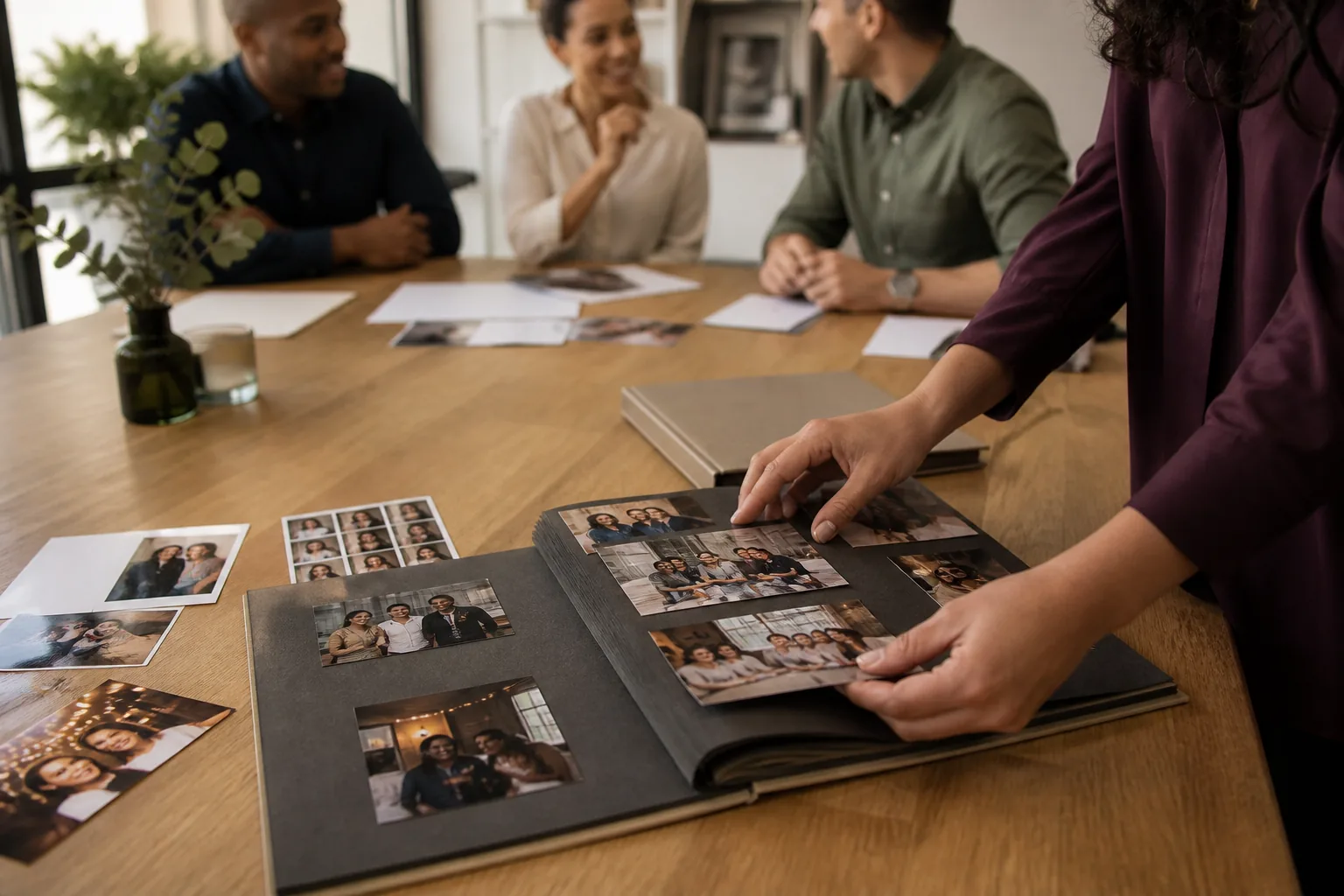
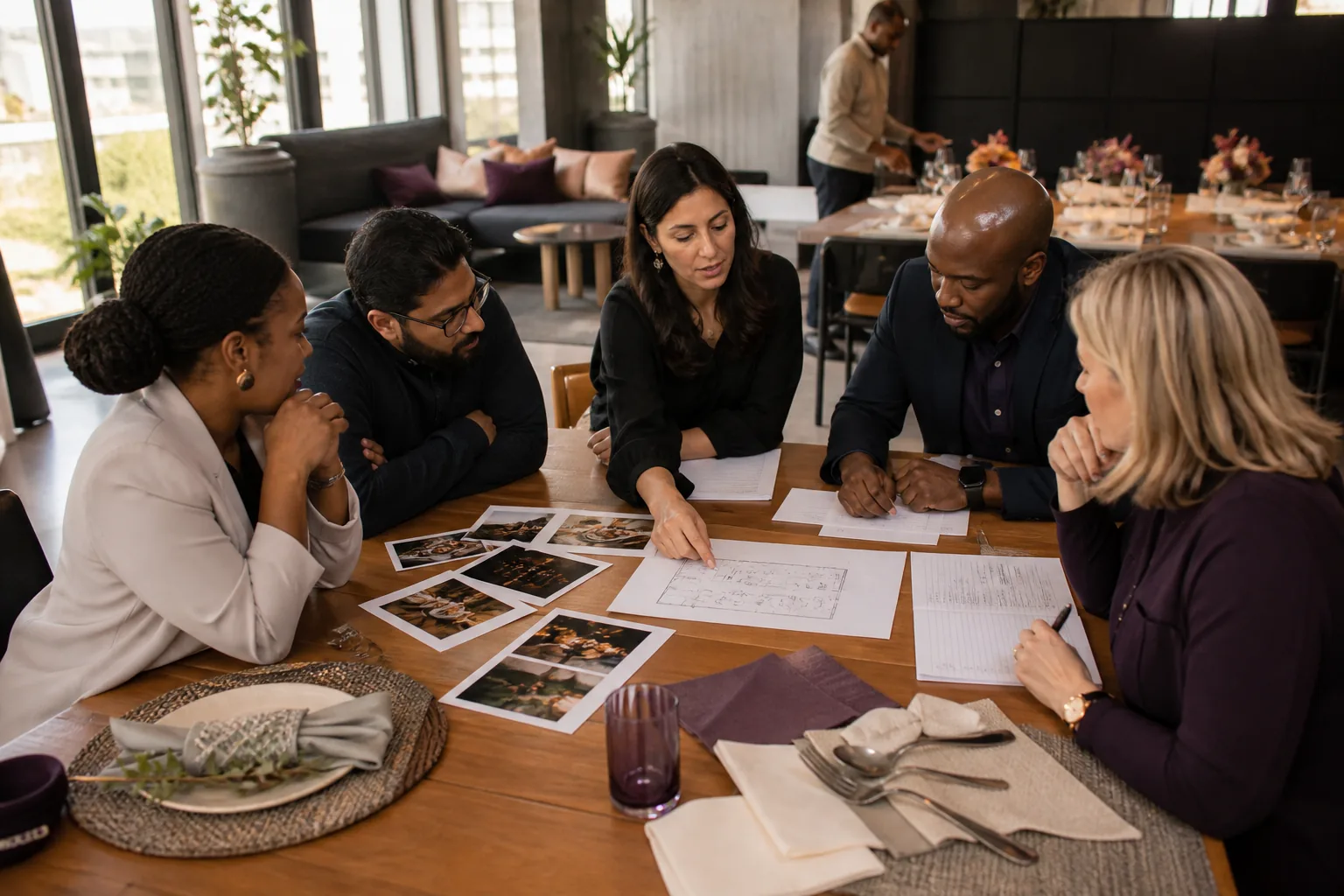
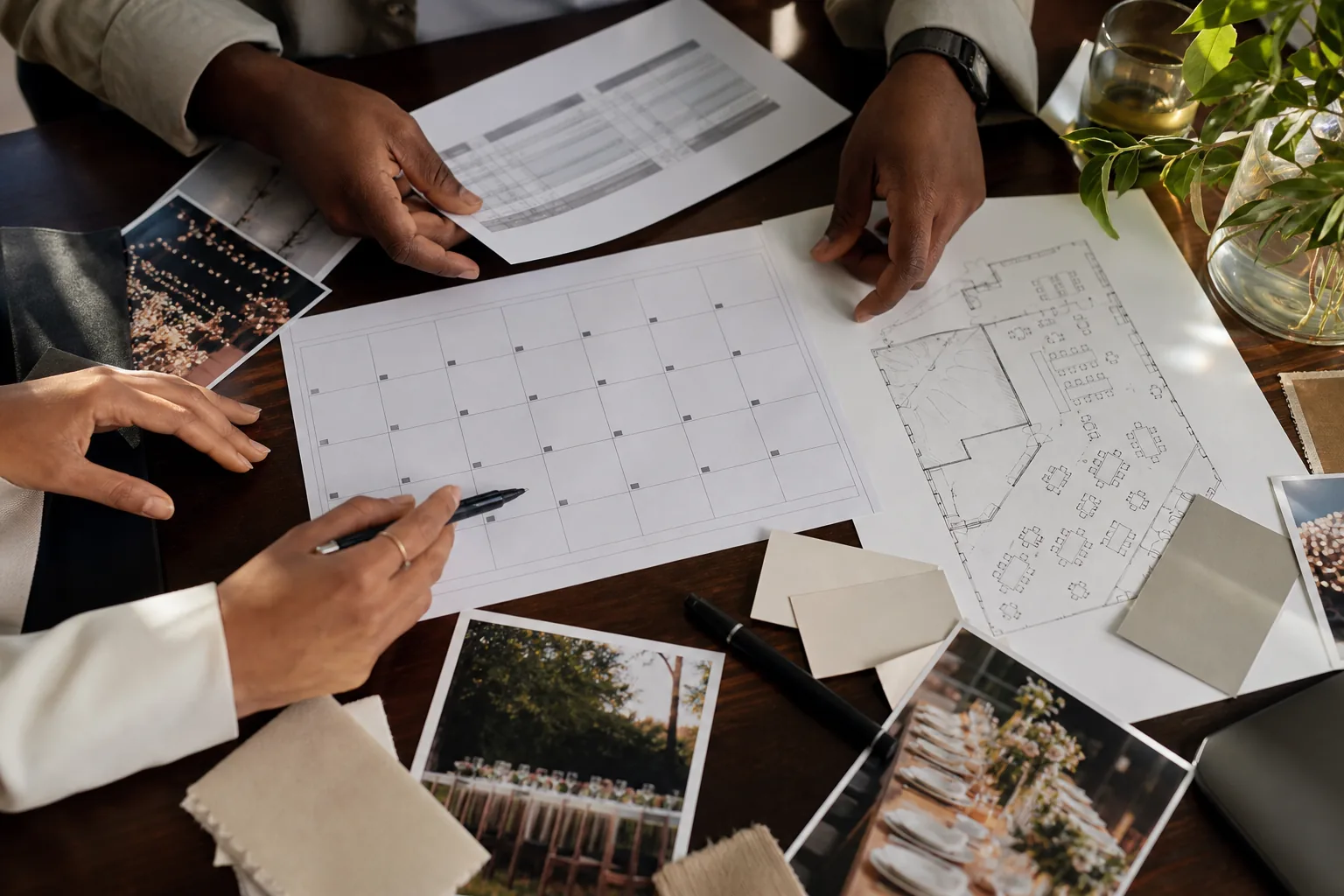
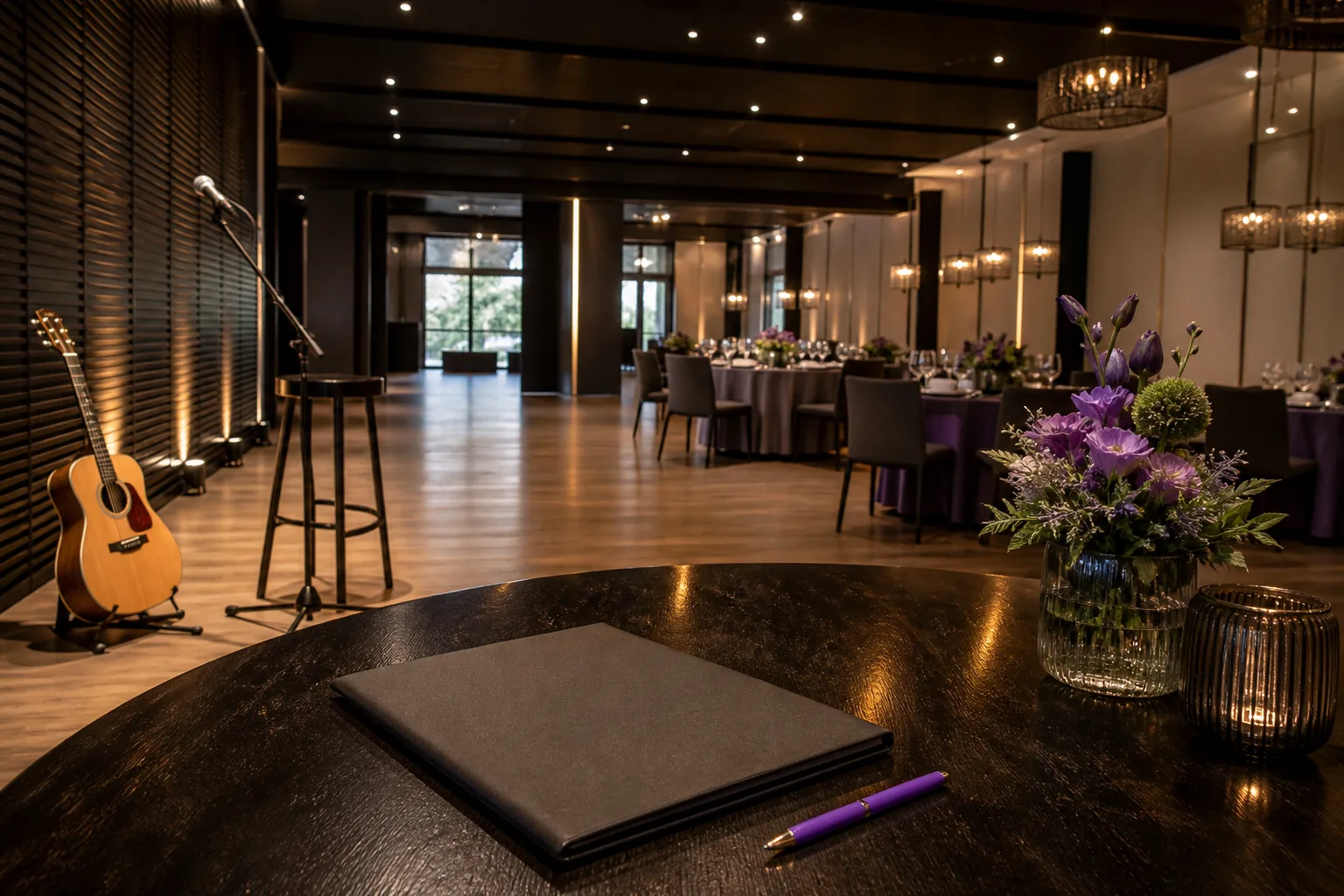
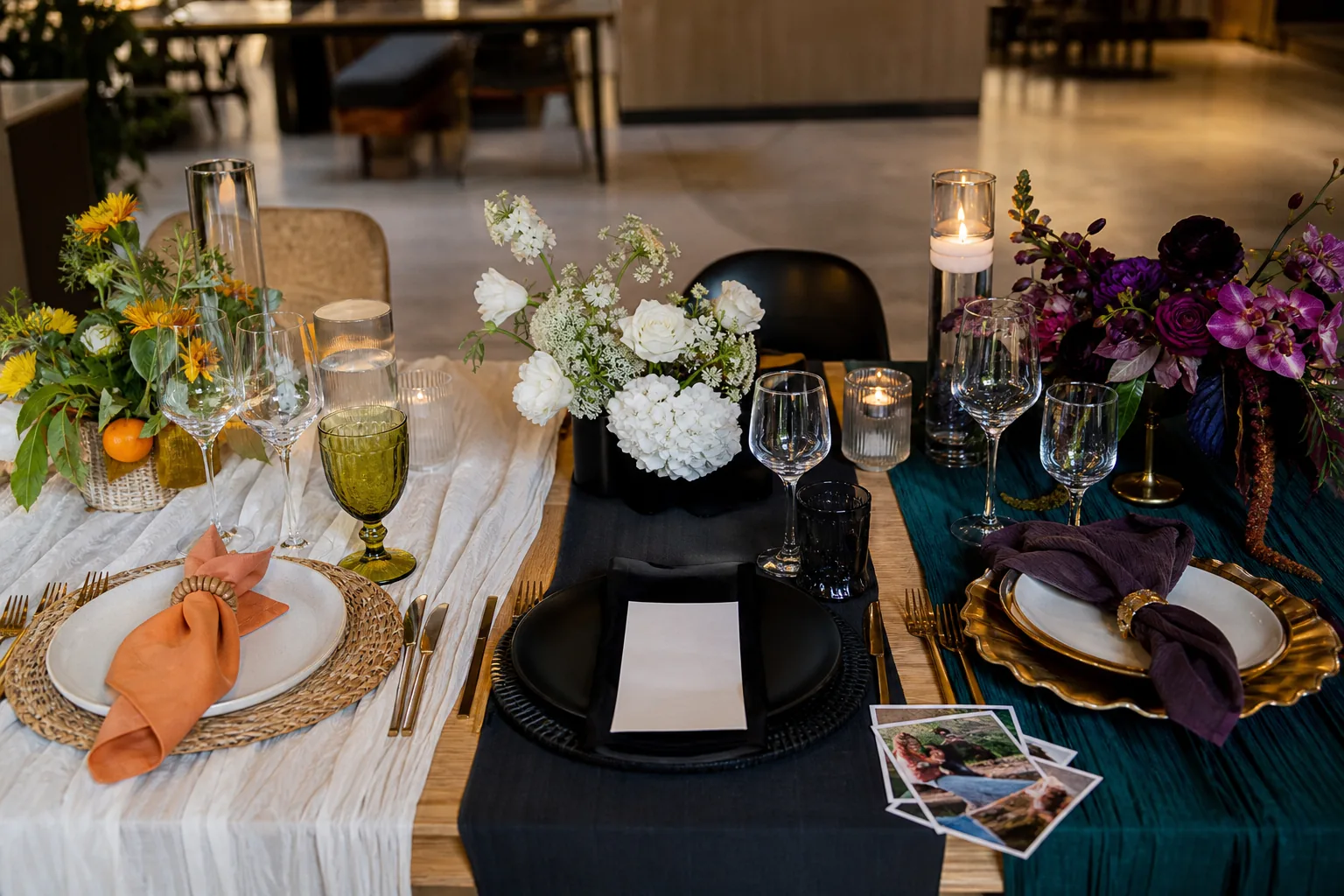
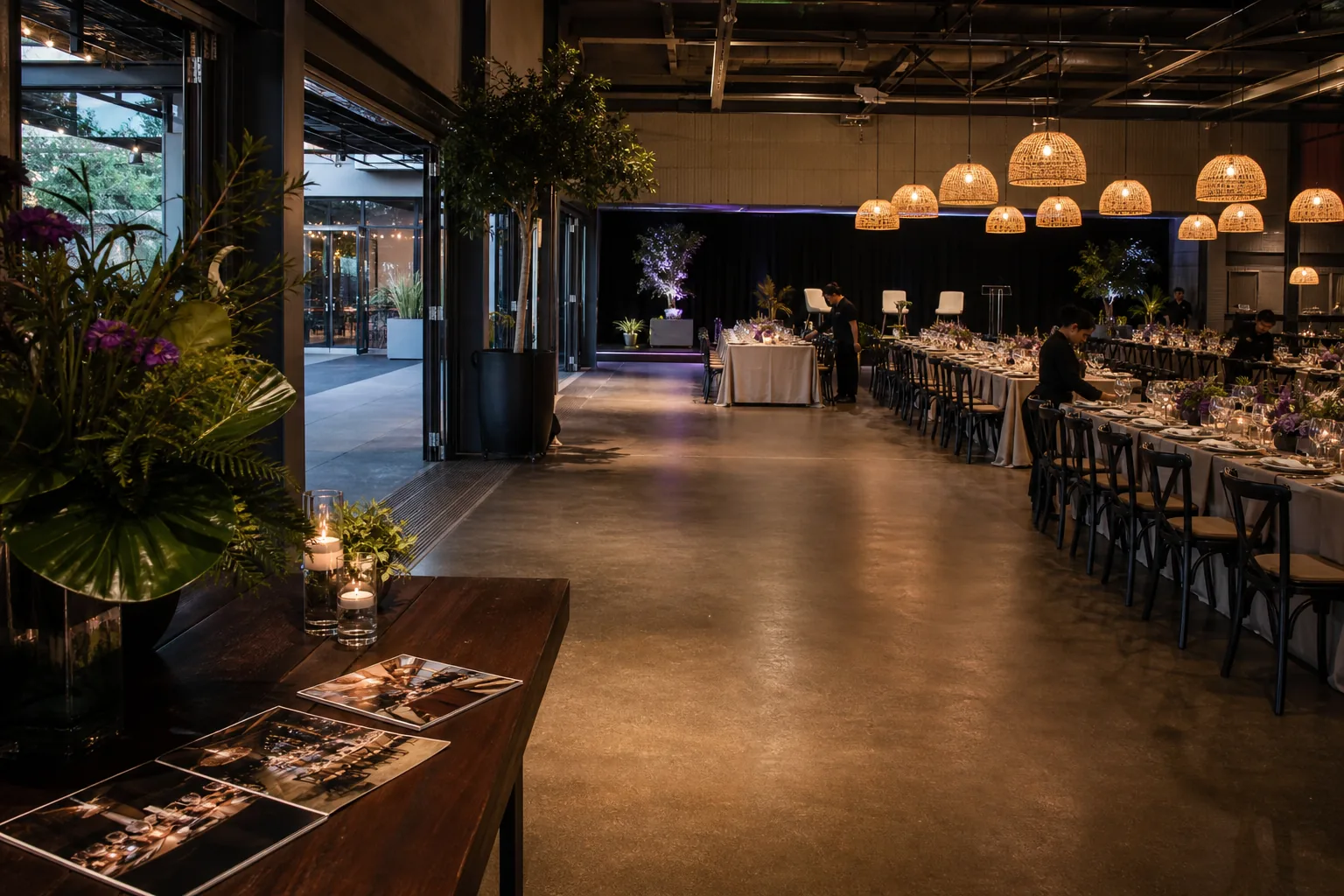
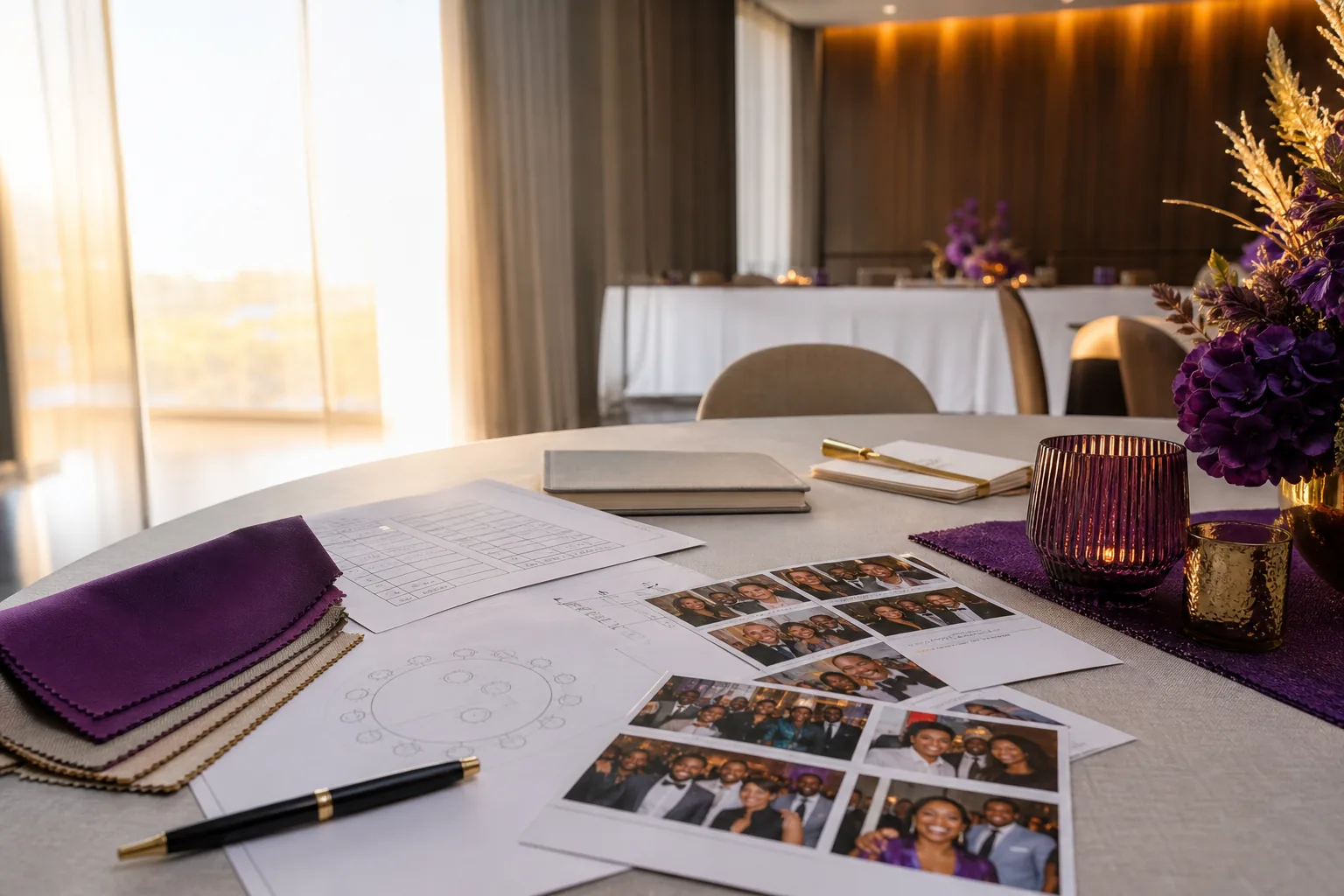
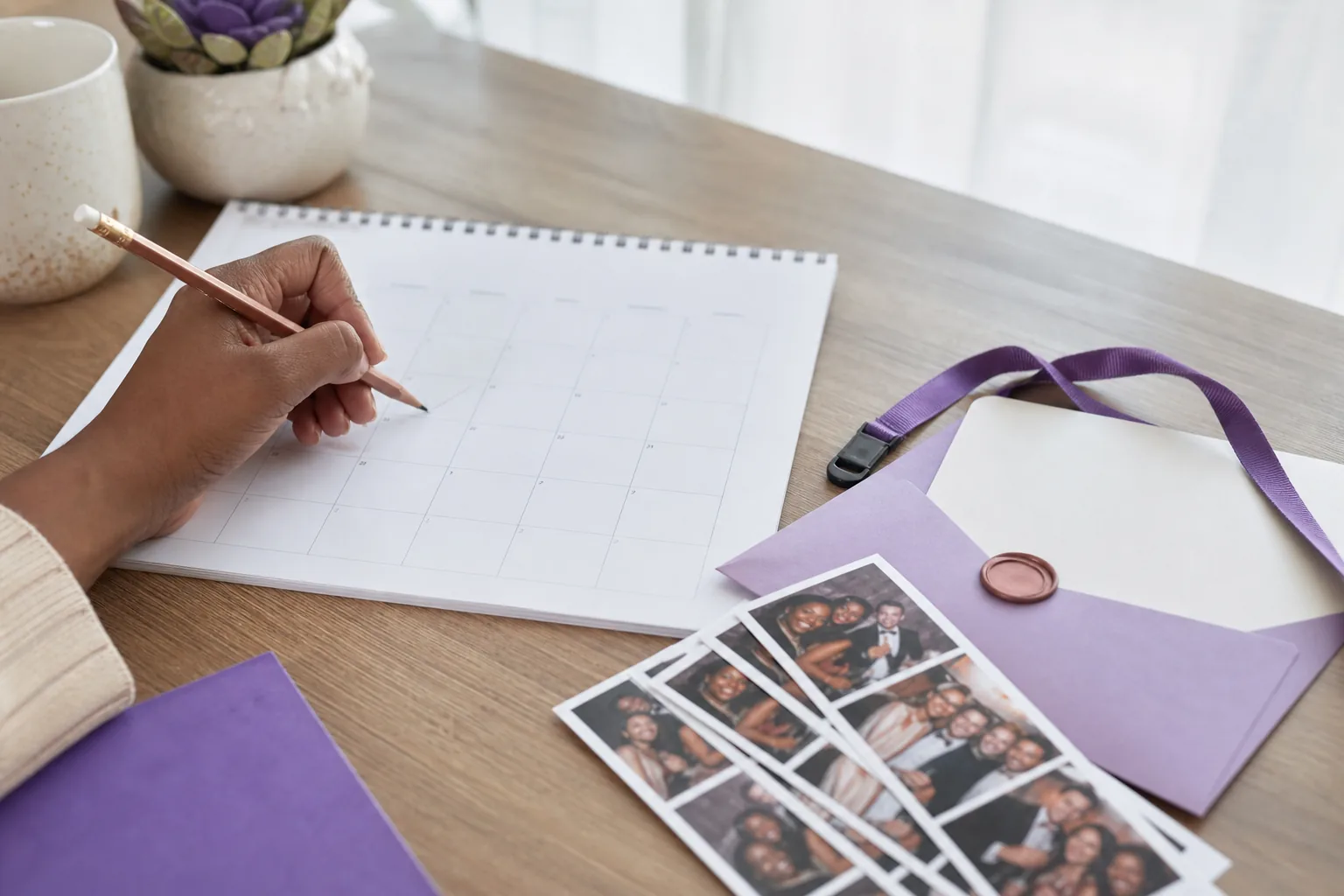
The year-end function activities employees remember are usually easy to join, produce something recognisable and give people a reason to look at the result again. For a company event, choose the photo activity from the keepsake you want at the end: a group print, a short photo strip, a message page, a digital album or a combination. Then decide the prompt, print design and handover before the event. A photo booth can be a useful part of that plan, but it should support the programme rather than create another queue.
Start with what people should keep
Before choosing props or a theme, decide what a guest should leave with. This small decision gives the rest of the activity a job.
A group print works when the priority is a shared memory for a team, department or table.
A photo strip suits smaller groups who want a compact takeaway that can fit into a diary or office drawer.
A signed page or guest-book entry adds a message to the image and creates a collective record for the organiser.
A digital album is useful when the company wants to share the event afterwards, subject to its consent and privacy process.
The output also helps you control the brief. If the print needs to be read by several people, a group portrait is more useful than a tiny individual frame. If the keepsake will be displayed in the office, keep the design legible at a glance and leave enough space for a short message.
Year-end function photo ideas with a clear result
The strongest staff party photo ideas are not complicated competitions. They give guests a simple invitation and make the result feel connected to the year they have just finished.
1. A team portrait with one easy prompt
Invite each team, project group or table to make one portrait around a prompt such as “the word that sums up our year” or “the win we are proudest of”. The prompt creates a reason to participate without requiring anyone to perform.
Keep the answer optional. Some guests will prefer a relaxed group photograph with no spoken response, and the activity should still work for them. If the print includes the prompt, use a short line that stays readable rather than a paragraph of event copy.
This format is particularly useful when the organiser wants a set of recognisable prints, one for each department or project. Give each group enough time to gather, and agree beforehand whether the organiser or the guests receive the finished print.
2. A year-in-review image with one safe detail
Create a portrait around a broad, positive detail from the year: a product launch, a community project, a new branch, a training milestone or a team achievement. Avoid putting confidential figures, client information or personal details on the print.
The organiser can supply a short list of approved milestones so the prompt feels specific without asking guests to improvise company messaging. This makes the image more meaningful than a generic “2026” overlay and gives teams a natural conversation starter.
If the milestone is still confidential, use a neutral prompt such as “one thing we learned this year”. Keep the activity celebratory rather than turning the photograph into an internal performance review.
3. Department prints that form a set
Ask every department to create one print using the same layout and one small variation. The variation might be a team colour, a short department name or a different approved prompt. The matching design turns separate company event photos into a collection that can be displayed together.
This works well for larger functions because it gives the organiser a simple completion check. Instead of trying to photograph every person at once, the event team can track which groups have taken part and invite remaining teams during a quieter part of the programme.
Do not make the department label so large that it dominates the faces. People are more likely to keep a print that looks like a photograph first and a piece of event branding second.
4. A one-word answer beside the portrait
Use a short word or phrase beside the photograph: “proud”, “together”, “brave”, “curious” or another answer chosen by the group. This creates a keepsake with a point of view while keeping the interaction quick.
Tell guests that a blank answer is fine. Some groups will want to choose a word together, while others will prefer the photograph alone. A good year-end function activity includes both kinds of participation and does not make the most outspoken person responsible for the whole group.
5. A colour-led photograph without a costume requirement
If the function has a colour or design direction, use it as a light visual cue. Guests might choose one accessory from the table, stand near a matching floral arrangement or use a simple approved prop. There is no need to ask everyone to buy an outfit or turn the photograph into a costume contest.
The result is more inclusive when the visual idea can be joined by people wearing ordinary work clothes. Keep props clean, easy to hold and suitable for different ages, mobility needs and cultural preferences.
6. A message card paired with a print
Place a small card near the photo activity and invite guests to write a thank-you, a hope for the next year or a note to the team. The photograph and message can be handed to the guest, placed in a company guest book or collected for an internal display.
Give people a choice about whether their message is shared. A private note and a public note are not the same thing, especially at a corporate event. The organiser should decide how completed cards are stored and who may photograph or publish them later. For primary South African privacy guidance, consult the Information Regulator South Africa and the organisation’s own policy.
7. A guest-book page built around groups
Instead of asking every person to sign a blank book, give each team a page with room for one print and a few short messages. The page can include a simple prompt such as “what should we carry into the new year?”
This makes the guest book easier to complete and gives groups a reason to stay together for another minute after the photograph. It also gives the organiser a visible handover point. Prepare spare pages, adhesive or photo corners and a pen that is comfortable to use before the function begins.
Make the activity easy for a mixed team
The best photo activity is the one people understand without a long explanation. Put the instruction where guests will see it, use one prompt at a time and let the host or event coordinator demonstrate the first example.
Build in a quiet option for guests who do not want a high-energy interaction. A seated group portrait, a photograph with no prop or a message-only contribution can sit beside the main activity. Make participation opt-in and tell guests what happens to digital copies, social sharing and any names or messages collected.
Avoid prompts that ask people to disclose health information, salaries, relationship status, political opinions or private client details. A year-end celebration can be warm without being intrusive. If children, clients or members of the public attend, include them in the consent and safeguarding plan rather than assuming the company policy covers every guest.
Design the print before guests arrive
The layout should be decided with the final output in mind. For a group print, keep faces large enough to recognise. For a strip, use a sequence that still makes sense when the strip is viewed on its own. For a message card, leave a real writing area rather than filling the whole design with logos.
Use a short event label, date or approved team reference only when it helps the keepsake. Check spelling, capitalisation and brand colours before the event, and view the design at the size it will actually print. Small sponsor lines and long slogans may look acceptable on a laptop but become visual noise on paper.
If the organisation has brand rules, send the approved logo files, colour values and wording to the supplier in one brief. Do not rely on a last-minute phone photograph of a logo. A clean, restrained layout usually ages better than a busy design built around every available brand element. For a closer comparison of strips and postcards, use the photo booth print sizes and layouts guide.
Plan the handover, not only the photograph
Someone should own the question “what happens after the print comes out?” Decide whether guests collect it at the activity, receive it at their table, add it to a guest book or receive it from the organiser later. This matters when the event has speeches, dinner service or a formal awards sequence.
Keep the collection point clear of the next group. If a photo booth or print station is near the entrance, do not let finished guests stop in the doorway while they choose between prints. A small side table can hold sleeves, message cards or a guest book without narrowing the main route.
Ask the supplier what is included in the selected package and which extras need separate approval. QuikPix’s Modern Photo Booth service page is the relevant place to compare the current still-photo service details before requesting a quote. Confirm the final print, digital delivery and branding arrangement in writing rather than assuming every photo experience has the same output.
Place the activity in the guest journey
An activity can be well designed and still underperform if it is placed in the wrong part of the room. Check the arrival route, bar queue, food service, speeches, dance floor and accessible movement before confirming its position. Leave enough space for the setup, the group using it and the people waiting.
For outdoor functions, agree on a weather fallback that keeps the same activity usable. A plan that only works in a sunny corner is not complete. The venue and supplier should know who makes the move decision and how much time is available to reset the area.
A quick photo-activity decision table
What the organiser wants
Activity to brief
Best keepsake
Check before approval
A record of each team
One prompt and one group portrait
Matching department prints
Guest list or department tracker
A relaxed conversation starter
One-word answer beside a portrait
Individual or group print
Prompt is optional and easy to read
A shared memory for the company
Message card with a team photograph
Guest-book page
Consent, storage and handover owner
A compact takeaway for a busy programme
Short photo sequence
Photo strip
Print timing and collection route
A visual record of an approved milestone
Year-in-review prompt
Branded group print
Wording is cleared and non-confidential
Use the table to choose one main activity and one supporting option. Too many choices can create hesitation at the station and make the result less coherent. If the event is large, repeat the same format at different points rather than adding several unrelated games.
The brief to send a photo supplier
Once the activity is chosen, send a brief that answers the operational questions early:
event date, area and venue status;
expected guest count and the approximate number of teams or groups;
the part of the programme when the activity should run;
the desired output, such as prints, a guest book, digital files or a mix;
the prompt, approved wording and any restrictions on company information;
print size, layout direction, colour and logo requirements;
room position, access route, power, lighting and weather backup;
who approves the design and who owns guest consent;
who hands over prints or completes the guest book;
the date by which the organiser needs a quote and design proof.
This brief lets a supplier recommend a suitable format instead of quoting for a vague “photo booth”. If the plan is ready and you want to check availability, use the QuikPix photo booth contact page with the guest count, venue and desired keepsake included.
The simple choice that makes the activity work
Choose the keepsake first, give guests one friendly prompt and decide the handover before the function begins. That sequence keeps the activity useful for the organiser, comfortable for a mixed team and more likely to produce something employees will actually keep. The photograph is the visible part. The thoughtful prompt, clear design and practical collection plan are what turn it into a good year-end function activity.
Small year end function ideas for teams under 50 do not need a scaled-down gala. The strongest format usually chooses one good shared experience, makes the travel and timing easy, and leaves enough space for people to talk. Start with the guest list, the result you want and the time people can give the event. Then choose a format that fits the team instead of adding a long programme to a small room.
If you are still deciding what the event needs to achieve, begin with the broader year-end function planning guide. This article narrows the decision to right-sized formats for small teams in Johannesburg, Pretoria and the wider Gauteng area.
Decide what “small” means for your team
“Under 50” is useful for a first brief, but it does not describe the guest experience on its own. A group of 18 colleagues who work together every day needs a different evening from 45 people spread across departments, offices or seniority levels.
Before you look at venues or suppliers, write down:
the number of employees and whether partners or families are invited;
the reason for the function, such as recognition, connection, client hospitality or a simple end-of-year break;
the time available, including travel from the office and the time people need to get home;
the broad budget per guest and the costs it must cover; and
the one person who will collect preferences and make the final call.
The purpose changes the shape of the event. A recognition lunch needs a short, audible formal moment. A team that has spent the year working remotely may need long tables and quiet conversation. A mixed group may prefer an activity that people can join without performing in front of the room.
Do not make every decision at once. Choose the format first. Themes, dress guidance and entertainment can follow once you know how the guest journey will work.
Seven small year-end function formats that work
The right idea is a format with a clear operating logic. It should be easy to explain, practical for the venue and flexible enough for different comfort levels.
1. A private-room meal with one short recognition moment
A private dining room, restaurant section or small venue can give a close team a proper break from the office without asking people to navigate a large function. It works well when the main objective is appreciation and conversation.
Keep the formal part short. A welcome, a few meaningful acknowledgements and one closing thank-you are usually easier to follow than a long awards programme. Decide who will speak, how long they have and whether the room has enough sound control before you confirm the menu.
Ask the venue about the minimum spend, dietary handling, parking, arrival flow and the time allowed for the room. A small group can still create a queue if guests arrive together and registration, welcome drinks and seating all happen at one doorway.
This format suits teams that want a calm afternoon or evening, especially when a late-night party would make travel difficult.
2. An activity followed by a simple meal
Pair one shared activity with food rather than booking several activities in a row. The activity could be a guided workshop, a cooking session, a short outdoor experience or another format the group can try together.
The important question is not whether the activity sounds exciting. Ask whether most guests will understand how to join, whether the venue can accommodate different mobility needs and what happens if someone prefers to watch for part of the session.
Plan the transition. People need time to move, freshen up, collect bags and settle before the meal starts. If the activity runs late, the social part becomes a rushed extension instead of the reward at the end.
An activity plus meal is a good choice for a project team that wants a shared memory but does not need a stage, a dance floor or a formal evening dress code.
3. A half-day offsite with a relaxed lunch
A small team can use a half-day offsite to mark the end of a project or create a clear boundary between work and celebration. The event might start with a short reflection, move into a practical team session and finish with lunch in the same general area.
Do not turn the entire function into another strategy meeting. If business content is necessary, agree on one question it must answer and stop there. The social part needs its own space, even if the venue is also used for a workshop.
Check travel time from the office, parking, arrival coffee, Wi-Fi if work content is unavoidable and the route home. A venue that looks close on a map may be inconvenient when the group arrives during peak traffic or needs to share rides.
This format works for teams that want the function to feel considered without losing a full working day.
4. A transformed office with catered food
For a group that is comfortable in its own space, a well-planned office function can be warmer and easier to attend than a formal venue. Move desks, clear a route, improve the lighting and create separate zones for food, conversation and any activity.
The office still needs a guest plan. Decide who is responsible for catering access, rubbish, music volume, building rules, security, lift access and the final clean-up. Keep the event away from confidential work on desks and do not assume that the usual meeting room is safe for food or crowded movement.
If the office is in a shared building, confirm the loading time and supplier access with the building manager. Small events often fail in the practical details because the organiser has planned the menu but not the delivery route.
An office transformation suits a team that values convenience, wants to control the start and finish time, or needs to accommodate a short celebration between work commitments.
5. A small awards lunch or afternoon tea
Recognition does not need a ballroom. A lunch, afternoon tea or early evening gathering can carry a strong appreciation message when the award criteria are clear and the programme is respectful.
Keep the number of awards proportionate to the size of the team. Name the reason for each recognition, avoid inside jokes that exclude other guests and give recipients enough time to respond without turning every category into a long speech.
The room should support attention. Check sightlines, sound, lighting and the distance between the presentation point and the tables. If guests need to stand, move to the front or collect something, keep a clear route so the ceremony does not interrupt food service.
This is a useful format when recognition is the event, not an item squeezed between multiple entertainment bookings.
6. A family-inclusive afternoon
If the organisation wants to thank households as well as employees, a daytime format can be more inclusive than an evening function. Choose a simple structure with food, shade, seating and one or two optional activities rather than trying to run a full festival.
Write the invitation for the actual guest mix. Confirm age ranges, supervision, dietary needs, transport and whether the venue is safe and comfortable for prams, older relatives or guests who need a quieter area. Do not make participation depend on dancing, sport or alcohol.
Weather planning matters for an outdoor function. Check the South African Weather Service forecast close to the date, but confirm the covered or indoor backup with the venue well before the final week. Tell guests what will change if the weather turns, including footwear, arrival and where they should go.
This format is practical for teams that want a shared celebration without asking employees to arrange another evening of childcare.
7. A small client or partner gathering
A group under 50 can still include clients, suppliers or partners, but the planning brief changes. The event now represents the organisation to people who may not know each other or the internal culture.
Choose a venue where conversation is possible. Make introductions intentional, label the hosts who can welcome guests and keep the programme light enough for people to meet. A long internal awards segment or a loud performance may suit an employee function but leave external guests standing on the edge of the evening.
Confirm invitations, dietary information, parking, arrival details and the person responsible for follow-up. Keep branding useful and restrained. The event should feel like hospitality, not a sales presentation disguised as a party.
This works when a small group of important guests needs attention and the organisation wants a more personal alternative to a large corporate event.
Match the format to the guest journey
Once you have two or three possible formats, test each one against the same five questions:
How will guests travel from work or home to the venue?
What happens in the first 15 minutes after arrival?
Where can people sit, stand, eat and have a quieter conversation?
What is the one formal or shared moment the event must deliver?
How will the group leave, and what does the organiser need to close off afterwards?
The format that looks most impressive on a supplier proposal is not always the best fit. A 25-person team may get more value from one good meal and a clear activity than from a programme designed for 200 guests. The smaller the group, the more visible an awkward transition becomes.
If colleagues are coming from different Gauteng areas, put the travel question near the start of the decision. A venue that is easy for one office can be frustrating for another. Confirm parking, ride-share collection points, public transport options where relevant and any walking between arrival, dining and activity areas.
Choose the venue around movement, not photographs
Venue photos show atmosphere, but the plan needs a route. Ask to see or describe the guest journey from arrival to departure:
Where does the group enter and register?
Is the first welcome point separate from food service?
Can the venue keep a quiet area available?
Are there enough toilets, seats and shaded areas for the actual group?
What happens if rain changes the outdoor plan?
Can suppliers load in and set up without crossing the guest route?
The answers may change the format. A private-room dinner works when the group can stay together. An activity plus meal needs a venue with a clear handover between spaces. An office function needs building approval and a practical clean-up plan.
For detailed venue selection, use the Johannesburg year-end function venues guide as a companion to this format decision. It covers group size and venue questions without pretending that one venue suits every team.
Keep the programme short enough to enjoy
A small event does not need a minute-by-minute schedule, but the organiser should still know the shape of the evening. A simple run sheet might include:
arrival and a first drink or welcome;
the main shared experience, meal or activity;
one short recognition or thank-you moment;
a photo or keepsake window if it is part of the brief; and
a clear finish time and transport reminder.
Leave space between these points. Guests will want to talk, and suppliers need time to reset a room or replenish food. If the organiser fills every gap, the event can feel like a meeting with better catering.
A photo booth can suit a small year-end function when it supports the guest journey rather than becoming another scheduled performance. Decide what the activity should do. It may give colleagues a low-pressure conversation point, create instant keepsakes or support a guest book.
Then check the practical conditions. There must be enough space for guests to approach, wait, take part and leave without blocking food, speeches or a supplier route. Confirm the available power, lighting, access, setup window and the person who will coordinate with the venue.
If the format is right, compare QuikPix photo booth options after the event brief and venue layout are clear. A small team may need a different setup from a large open event, and the useful choice depends on group size, timing, room layout and the kind of keepsake guests will use.
Do not book a photo activity simply because a list of small year-end function ideas includes one. It should solve a real planning need and fit the room.
A quick decision table for teams under 50
Team situation
Strong starting format
Main question to settle
Close team that wants conversation
Private-room meal
Can the room support a short recognition moment and easy table service?
Team looking for a shared memory
Activity plus meal
Can everyone join comfortably, and is the transition between parts simple?
Team with limited time away from work
Office transformation
Who owns building access, catering, music and clean-up?
Team marking a project or milestone
Half-day offsite
How much work content is necessary, and where does the celebration begin?
Organisation thanking families
Family-inclusive afternoon
Are shade, seating, supervision and weather backup clear?
Small group with external guests
Client or partner gathering
Can guests meet naturally without an internal programme taking over?
Team that wants a physical keepsake
Any format plus a photo activity
Where will the activity sit without blocking the guest route?
Use the table to narrow the choice, not to skip the venue conversation. Ask the team for preferences only after you have explained the two or three formats that are genuinely practical. Too many options create another planning task.
The message guests need to receive
Once the format is set, write the invitation in plain language. Include the date, arrival time, venue area, parking or transport detail, what guests will do, the finish time and any dress guidance. If the function includes outdoor movement, mention footwear and a layer without turning the note into a list of rules.
Avoid “something fun” or “dress to impress” when guests need to make decisions. Say whether the event is a lunch, a private-room dinner, an activity followed by food or an office celebration. If partners or families are invited, state who is included and how the RSVP should be completed.
Send one clear version of the message. If the plan changes, explain what changed and why. Guests should not have to compare three WhatsApp messages to work out where to arrive.
The sensible next step
Choose the event result, guest mix and time window first. Shortlist two formats, test their guest journeys and choose the one that gives a small team a shared experience without a crowded programme.
When the format and venue area are clear, contact QuikPix with the date, Gauteng location, guest range, timing and any print or branding requirements. The more useful the brief, the easier it is to decide whether a photo activity belongs in the plan.
If you are twelve weeks out from a year-end function, the useful question is not “Have we booked everything yet?” It is “Which decision must be owned this week, and what evidence lets us move on?” This checklist takes a Gauteng team from the first brief to a usable event-day run sheet, covering format, guest numbers, venue access, approvals, entertainment, weather backup, supplier coordination and the photo experience. Keep one working document, one decision owner and one deadline for each item.
If the event shape is still open, start with the broader Johannesburg year-end function planning guide. This checklist is for the next stage, when the organising team needs to turn a direction into a controlled plan.
What this checklist should control
A year-end function checklist is useful when it records decisions, not just tasks. Each line should show the item, the person who owns it, the deadline, the people who must approve it and the evidence that it is complete.
Use it to keep five threads connected:
the purpose of the function and the guest experience you want;
the venue, access route, floor plan, power and weather fallback;
the programme, catering, entertainment and supplier handovers;
guest communication, RSVP numbers, accessibility and dietary information; and
the photo, print or keepsake plan, including its operating window and handover point.
Do not create separate versions for the venue, caterer, host and internal team. A shared master document prevents the familiar problem where everyone is working from a different start time.
Weeks 12 to 10: Set the brief and choose the shape
Week 12: Write the one-page brief
Start with the reason for the function. Is it a thank-you, a formal awards evening, a team celebration, a client event or a chance for departments to mix? The answer affects the room, the programme and the type of participation that will feel comfortable.
Record the working details in one page:
purpose and success measure;
expected guest range, including employees, partners or clients;
date options and the decision-maker who can approve them;
preferred area in Johannesburg, Pretoria or elsewhere in Gauteng;
working budget and the lines that are still unknown;
formal moments such as awards, speeches or a product update; and
non-negotiables around accessibility, dietary needs, transport, privacy or dress.
If the guest number is still a range, keep it visible. A venue that works for 60 people may not suit 140 once a stage, buffet, dance area, entertainment and photo queue are included.
Week 11: Decide the event format
Choose the shape before choosing the decoration. A lunch, cocktail function, dinner with awards, afternoon team activity and evening party each create different demands on arrival, food service, speeches and transport.
Ask the organising team to agree on three things:
What should guests be doing during arrival, the main meal and the closing part of the event?
Which moments must happen at a fixed time?
Where should guests have room to talk without being pushed into an activity?
This is also the right time to decide how formal participation should be. A mixed team may include people who enjoy a stage moment and others who prefer a quieter interaction. Build in ways to join, watch or pass without making anyone explain why.
Week 10: Shortlist venues by the real layout
Create a venue shortlist from the expected format and guest range, not from the maximum capacity on a sales page. Ask each venue for the room dimensions, proposed seating plan, service areas, loading route, parking information, supplier access times and indoor alternative if the event is outside.
The Johannesburg year-end function venue guide can help structure those questions. Request a floor plan in the layout you are actually considering. Mark registration, bar, buffet, stage, speeches, entertainment, quiet seating, toilets and any photo or keepsake activity before you compare quotes.
Weeks 9 to 7: Confirm the venue and the supplier brief
Week 9: Check practical fit before paying a deposit
Walk through the guest journey on paper. Where does a guest enter? Where do they wait? Can a person using a mobility aid reach the main room, toilets and activity areas without a difficult detour? Can staff move food and equipment without crossing the registration queue?
Confirm the details that are easy to miss in a brochure:
supplier arrival and loading times;
lift, stair and doorway dimensions where equipment is involved;
socket locations and who controls access to circuits;
sound limits, shutdown times and any venue-approved AV supplier;
rain, wind and heat arrangements for an outdoor plan;
Wi-Fi requirements for registration, content sharing or payment systems; and
the person who can make a venue decision on the day.
Keep factual venue information tied to the venue’s current written confirmation. Do not rely on an old PDF or an informal message when the room, access time or weather plan matters.
Week 8: Lock the budget and approval path
Rebuild every quote under the same headings. Separate venue, food, drinks, staffing, entertainment, AV, furniture, transport, printing, décor, photography and contingency. Check what is included, what is optional and what becomes an overtime charge.
Name the approval owner for each spend. A supplier cannot finalise a design if the brand team has not approved the logo treatment. A caterer cannot confirm quantities if the RSVP deadline is unclear. A venue cannot reserve a layout if the guest count keeps changing without a decision date.
Avoid adding a contingency as a vague percentage and then forgetting it. Write down what it is meant to cover, such as weather changes, extra guests, access delays or a programme extension.
Week 7: Send a useful supplier brief
A supplier brief should describe the event, not only ask for a price. Include the date, area, guest range, venue status, access window, programme moments, floor-plan constraints, technical requirements, approval process and the response deadline.
For entertainment, use the corporate event entertainment guide to compare options by programme job, audience comfort and transition point. For a photo experience, state whether the priority is a relaxed arrival activity, a keepsake during the main function or a structured guest-book moment. The supplier can then respond to the real use case.
Ask each supplier to identify:
what they need from the venue;
what they need from the organiser;
what they bring and what the venue must provide;
how long setup and strike will take;
how they handle a late start or programme change; and
which part of the quote is still subject to confirmation.
Weeks 6 to 4: Build the guest experience
Week 6: Confirm the programme skeleton
Write the running order before you polish the wording. Use a simple table with time, action, location, owner and dependency. Include supplier access and setup, not just guest-facing moments.
At this stage, the programme can stay broad:
Time block
Decision to make
Owner
Evidence of completion
Arrival
Registration, welcome drink and first activity
Event lead
Guest route and staffing note
Opening
Welcome, housekeeping and formal remarks
Host or MC
Approved running order
Main service
Meal or catering sequence
Venue or caterer
Service timing confirmed
Formal moment
Awards, speeches or recognition
Internal owner
Speaker list and time limit
Shared activity
Entertainment, photo or keepsake moment
Activity owner
Supplier brief and floor-plan position
Close
Final remarks, transport or informal finish
Event lead
Departure and handover plan
Keep breathing room between major sections. If every minute is filled, a small delay at registration can push the whole evening off course.
Week 5: Plan the photo and print experience
Choose the purpose before the format. Is the photo experience meant to help guests mix, give people a physical reminder, support a guest book or create a branded take-home item? The answer affects the position, start time, queue allowance and handover.
Mark the activity on the floor plan. Check the route from the main guest area, the space for people waiting, access to power, lighting conditions, cable safety and the location where prints or other keepsakes will be handed over. Avoid placing the activity where it blocks the bar, buffet, stage sightline or service lane.
If your team is comparing options, review QuikPix’s photo booth options after the event brief is clear. For printed outputs, decide who checks the artwork, who approves any branding and where guests will collect their prints. Do not leave print handover to the supplier’s arrival on the day.
Week 4: Close the guest communication loop
Send the invitation or save-the-date with the information guests need to make a sensible response. Include the date, area, arrival time, dress guidance, RSVP deadline, accessibility contact and any transport or parking instructions that have been confirmed.
Keep a single RSVP record. Track invited, accepted, declined, not responded, dietary information and accessibility notes separately. Do not circulate a guest list more widely than the people who need it to plan the function.
Set a late-response rule. If numbers change after the catering deadline, decide who approves the extra cost and how the venue is told. The checklist should show that decision rather than leaving it in a group chat.
Weeks 3 to 2: Close details without losing the plot
Week 3: Approve artwork, scripts and supplier details
This is the week for items that can hold up another person’s work. Approve invitations, menus, signage, name lists, award details, photo or print artwork, music cues and any branded material that needs a formal review.
Use a simple version label. “Final” is not helpful if three files have that name. Record the approver, date and location of the agreed file in the checklist.
Reconfirm the items that are often assumed rather than written down:
final guest estimate and meal quantities;
supplier names and mobile numbers;
venue access and setup window;
floor plan and table layout;
power, AV and Wi-Fi responsibilities;
weather decision time and indoor fallback;
accessibility arrangements;
programme cues and speaker time limits; and
photo or print handover, including who checks the table or collection point.
Week 2: Test the handovers
Run through the event as if you are a guest, supplier and venue staff member. The organiser may know that the photo activity starts after speeches, but the supplier needs a time, position and cue. The caterer may know dinner is planned for 19:30, but the MC needs to know what happens if service is late.
Call out every dependency:
registration needs the final list and a staffed table;
catering needs confirmed numbers and dietary notes;
speeches need the final speaker order and time limits;
entertainment needs access, technical details and a start cue;
a photo or print activity needs an operating window, space and handover owner; and
an outdoor event needs a weather call and a ready indoor layout.
Share the working run sheet with the venue, host, caterer, AV team and suppliers. Ask them to flag a conflict in writing before the final week.
Week 1 and event day: Run the plan
One week out
Freeze the event-critical decisions. A last-minute change to the theme is usually less serious than an unconfirmed loading time, missing speaker or incorrect meal count. Use the checklist to separate the two.
Confirm the final guest number, supplier access, room layout, weather decision, transport, payment approvals and contact list. Print or save an offline copy of the run sheet. Make sure the venue and event lead have the same version.
Send guests the final arrival details only when they are confirmed. If parking, access or dress guidance has changed, say so clearly rather than assuming everyone saw the earlier message.
On the day
The event lead should walk the room before guests arrive. Check entrances, routes, signage, tables, stage sightlines, power, supplier positions and the quiet space. Confirm that the person responsible for each activity knows when to start, where to stand and who can change the plan.
For a photo or keepsake activity, check that the operating position is still clear after the room has been dressed. Confirm the queue path, print or item handover point and the person who will keep the table supplied. If the weather has changed, make the move early enough that guests do not arrive at a half-built alternative.
Keep a short issue log. Record the decision, the owner and the time, then return to the guest experience. A checklist is there to help the team make calm decisions, not to punish the event for changing.
Questions to ask before the final supplier confirmation
Use these questions in the last comparison round:
What exact event problem does this supplier or activity solve?
What must be ready before setup can start?
What floor space, access, power, lighting, sound or Wi-Fi is required?
What is the guest-facing start and finish time?
How many guests can take part at once, and where will they wait?
What happens if the programme starts late or the weather changes?
Which artwork, wording, branding or guest information needs approval?
Who owns the handover of prints, keepsakes, photographs or other outputs?
Which costs sit outside the quoted amount?
What is the supplier’s best on-the-day contact number?
Ask for the answers in the quote or confirmation document. A verbal promise is difficult to compare when the organising team is under pressure.
Common checklist traps
The first trap is treating a venue capacity as a finished floor plan. Capacity does not show the room you have left after staging, buffet, queues, entertainment, service routes and accessibility needs.
The second is booking suppliers before deciding the programme. If the activity has no defined job or time window, it competes with speeches, food and conversation.
The third is leaving approvals until the final week. Artwork, guest names, brand use, dietary information and scripts all need an owner and a date.
The fourth is planning an outdoor function without a real fallback. Check the South African Weather Service forecast close to the event, but set the decision time and indoor layout earlier so the venue and suppliers can act.
The fifth is allowing the checklist to become a long list with no ownership. If a line has no owner, it is not a plan yet.
The sensible next step
Once the brief, guest range, format and venue constraints are clear, turn the checklist into a supplier pack. Include the floor plan, working run sheet, access window, programme job, approval route and the questions that still need a confirmed answer.
If the photo experience is part of the plan, ask QuikPix for a quote with the event date, Gauteng venue area, guest range, timing and any print or branding requirements. That gives the team enough context to discuss the right route without turning the checklist into a sales script.
The best year-end function plan is not the longest document. It is the one that tells every person what has been decided, what they own next and what will happen if the event changes.
Corporate entertainment works best when it solves a programme problem. Use background music to soften arrivals, a short shared activity to reset attention after formal content, roaming entertainment to help guests mix, or one strong headline act when the room needs a clear focal point. Start with the event objective, audience and timetable. Only then shortlist acts.
In Johannesburg and Pretoria, venue access, sound limits, power, travel time and the running order can rule out an attractive idea quickly. A practical entertainment brief should make those constraints visible before suppliers quote.
Start with the job entertainment must do
Write one sentence that explains why the entertainment is there. “Give guests something to do” is too broad. Better briefs are specific:
create an easy conversation point during a 45-minute arrival window;
restore energy after a long conference session;
give mixed teams a shared activity without forcing public performance;
hold attention while the room changes for dinner;
mark an award or product reveal with one memorable moment; or
provide a relaxed close without making non-dancers feel excluded.
This sentence becomes the test for every idea. If an act is impressive but does not help the programme, it is decoration rather than a planning solution.
Match the format to the event objective
Networking and client events
Choose entertainment that leaves space for conversation. A low-volume acoustic duo, close-up magician, illustrator or guided tasting can give people a natural opening without stopping the room. Ask whether the performer works with small clusters and how much space each interaction needs.
Avoid placing loud speakers beside registration, bars or sponsor conversations. If guests must raise their voices, the entertainment is working against the event.
Conferences and internal meetings
The useful moment is often a transition, not the whole evening. A short quiz linked to the day’s themes, a facilitated rhythm activity or a concise comedy set can reset the room. Keep it time-boxed. A 15-minute intervention that starts promptly is often more valuable than an open-ended activity that delays the next session.
Check with speakers and organisers before using company content in questions or jokes. Internal references can engage a team, but they also need approval.
Awards evenings and formal dinners
Formal programmes need pacing. Entertainment can cover a kitchen service interval, create a clean change between award groups or provide one headline segment after the final presentation. Stage acts need a clear sightline from every table, reliable sound and an agreed technical rehearsal.
If guests are eating, avoid an act that depends on constant audience responses. Roving entertainment may suit pre-dinner drinks better than table service.
Product launches and brand activations
The experience should reinforce the product story instead of competing with it. A live illustrator, demonstration, interactive projection or guided challenge can support discovery when the interaction is easy to understand and quick to join.
Confirm brand approvals, data collection and content reuse before the event. If guests create or share material, make the consent and handover process clear. Do not assume a social post is automatically permitted because it was made at a corporate event.
Corporate entertainment ideas by programme moment
Programme moment
Formats worth considering
Main planning check
Arrival and registration
Acoustic music, close-up magic, live illustration, simple table prompts
Keep registration audible and routes clear
Between sessions
Short quiz, facilitator-led game, rhythm activity, concise performance
Fix a start and finish time
Cocktail hour
Roving performers, tasting station, portrait or keepsake activity
Treat this table as a shortlist, not a shopping list. One well-placed format usually gives the programme more shape than several unrelated activities.
Ideas for mixed teams
Corporate audiences can include different ages, languages, mobility levels, seniority and comfort with public attention. Participation should be easy to understand and easy to decline.
Low-pressure interactive formats
Table quizzes, collaborative puzzles, tasting stations and short creative prompts let guests join with colleagues. They work best when instructions take less than a minute and no one is singled out without consent.
Roving entertainment
Close-up performers can reach guests where they are and reduce the need for a formal stage. Agree how they will move through the room so they do not block waiting staff or repeat the same interaction at adjacent tables.
Live music with a clear volume brief
Music can change the atmosphere without requiring participation. Specify whether it must sit behind conversation, support an entrance or become the focus later. Ask who controls volume and how the band will respond when speeches start.
Keepsake-led activity
A tangible output can give the interaction a clear finish. Live illustration, printed photographs or a message wall may suit events where guests should leave with something useful or recognisable. If photographs are part of the plan, compare QuikPix’s photo booth options only after you have confirmed the event objective, space and approval needs.
Plan for space, power and guest flow
Mark entertainment on the floor plan before the final supplier briefing. Include the performance footprint, equipment, cable paths, speaker positions and the space where guests will wait or watch.
Keep entrances, fire routes, bars and service lanes clear. A roaming act still needs a base for cases and personal items. A live illustrator or interactive station may need more queue space than its table footprint suggests.
For any powered format, confirm the socket location, circuit requirements, extension routing and backup plan with the venue and supplier. Do not assume a nearby wall socket is available for event use. Outdoor entertainment needs a weather decision time and a real indoor alternative.
Johannesburg and Pretoria travel also affects setup. Ask when the venue permits supplier access, where loading happens, whether lifts or stairs are involved, and when equipment must be removed. A supplier arriving during guest registration creates pressure that an earlier access slot could avoid.
Build the running order around real transitions
Put entertainment into the master run sheet with four times: supplier access, sound check or setup complete, guest-facing start, and finish. Assign one person to cue it.
Check the handovers on either side. If a speaker overruns, does the entertainment shrink, move or stay fixed? If dinner service is late, can the act fill time without exhausting its best material before all guests are seated?
Share the final order with the venue, AV lead, caterer, host and entertainment supplier. Each party needs to know what changes in the room, not only when the performance starts.
Questions to ask before booking
What exact programme problem will this solve?
How long is the guest-facing segment, including introduction and exit?
What floor space, ceiling height, sound, lighting and power are required?
How many guests can participate at once, and will a queue form?
What happens if guests arrive late or the programme overruns?
Which material, music, jokes, prompts or branding needs approval?
Is the format accessible to guests who cannot stand for long, hear instructions clearly or participate physically?
What is the outdoor weather fallback?
What time does the supplier need access, and when is strike complete?
Which costs sit outside the quote, such as travel, AV, staging, meals or overtime?
Ask for the answers in writing. It makes supplier comparisons easier and gives the event manager a usable briefing record.
Avoid common programme mistakes
Do not book every idea that tests well with the organising team. Guests need time to talk, eat and move. Too many activities create competing queues and make the programme feel managed rather than social.
Avoid compulsory public performance unless the audience and objective clearly support it. Seniority can make an apparently playful challenge uncomfortable. Give people a way to watch, join briefly or opt out.
Do not hide technical requirements until the final week. Sound, lighting, staging and power often determine whether an idea is viable. Resolve them while there is still time to change format.
Finally, do not make dancing the only successful ending. A lounge area, quieter activity or keepsake interaction gives guests another way to stay involved.
A practical way to shortlist the final idea
Score each option from one to five against objective fit, audience comfort, programme fit, venue practicality, approval risk and total cost. Weight objective and audience fit most heavily. The option with the biggest visual impact is not always the one that improves the event.
When two ideas score similarly, choose the simpler format or the one that solves more than one programme need. An acoustic act that supports arrivals and later opens the dance floor may be easier to coordinate than two separate suppliers.
The best corporate entertainment choice is the one guests can understand quickly, the venue can support safely and the programme can accommodate without strain.
If you are choosing year end function themes, start with the people in the room. A good theme gives guests a shared direction without making anyone feel as if they have been given homework. For a Johannesburg team, the most practical theme is usually the one that fits the venue, travel plan, dress code comfort level and the kind of photographs people will actually want after the event.
The theme should make decisions easier. It should help you choose the room style, music, menu cues, printed photograph design and dress guidance. If it creates more supplier work than value for guests, simplify it.
Start with the team, not the theme name
Before choosing a theme, write down the mix of people who will attend. A head-office team, regional managers, partners, clients and families will not all respond to the same idea in the same way.
Settle these points first:
Guest mix: employees only, partners, clients, families or a combined group.
Age range: junior staff, senior management and retired founders may share the same room.
Travel pattern: people driving from Sandton, Midrand, Pretoria or the East Rand may need a practical finish time.
Venue style: hotel ballroom, rooftop, restaurant, activity venue, conference room or outdoor estate.
Dress comfort: smart casual, cocktail, black tie or themed colour only.
Company tone: playful, formal, grateful, launch-focused or low-key.
That short brief prevents the common mistake: choosing a theme because it sounds fun online, then discovering it does not fit the guest list or venue.
Themes that work for mixed Johannesburg teams
The safest themes are flexible. They give confident guests room to dress up, while quieter guests can participate with a colour, accessory or simple styling cue.
Theme direction
Best fit
Why it works
Modern cocktail evening
Hotels, rooftops and restaurants
Smart, easy to dress for and suitable for mixed seniority levels.
Summer garden party
Outdoor venues, estates and lunch events
Relaxed without feeling casual, with natural colour and light for photographs.
Monochrome with one accent colour
Corporate teams and awards evenings
Clean, branded and easy to carry into invitations, table cards and photo layouts.
Local food market
Informal year-end lunches and larger staff groups
Lets guests move around and keeps the room social without a rigid programme.
Awards night without heavy formality
Recognition events
Gives structure to speeches and photographs without forcing black tie.
Travel lounge or destination evening
Teams with regional offices
Works well when colleagues travel in from Pretoria, Johannesburg and surrounding areas.
Notice that none of these require a costume. They create a look and a mood, but still allow people to arrive as themselves.
Match the theme to the venue
A theme should feel natural in the room. A tropical dress code inside a dark conference hall usually needs more decor to make sense. A modern cocktail theme in a rooftop venue may need very little extra.
Ask the venue these questions before committing:
Can the room lighting support the mood after sunset?
Is there enough pre-drinks space for arrivals and photographs?
Will the theme clash with fixed carpets, curtains or wall colours?
Can suppliers load in without disturbing guests?
Is there a practical area for printed photographs, a guest book or branded keepsakes?
If the venue already has a strong look, let it do some of the work. The theme can then appear in the invitation, menu, table detail and photo design rather than in every corner of the room.
Avoid instructions that sound like a costume party unless the team already enjoys that kind of event. If you want a stronger visual result, use the styling in the room and the print design rather than placing all the pressure on guests.
Plan the photographs around the theme
The theme can make the photographs more useful, but only if it is planned deliberately. A print layout that matches the invitation or awards identity feels more considered than a generic frame added at the end.
Decide early:
whether photographs should feel formal, playful or branded;
whether printed strips, larger prints or digital outputs suit the event;
whether the company logo should be subtle or prominent;
whether the photographs are for guests, internal culture, campaign follow-up or a memory table;
where people will collect prints without blocking the room.
If guests still need to choose the right photo experience, the QuikPix booth comparison is the sensible next step. It explains the differences before you lock the theme into artwork.
Theme ideas to avoid
Some themes create friction even if they look good on a mood board.
Avoid themes that:
rely on expensive costumes;
are difficult to explain in one sentence;
require the venue to be transformed completely;
make senior guests feel out of place;
depend on outdoor weather without a backup;
copy a movie, brand or celebrity idea too closely;
create photographs that guests will not want to keep.
The test is simple: if a guest reads the invitation while busy at work, will they immediately know what to wear and what kind of evening to expect?
A quick decision checklist
Use this before you brief suppliers:
The theme fits the guest mix and company tone.
The dress code can be understood in one sentence.
The venue already supports the look, or needs only modest styling.
The menu, music and room layout can follow the same direction.
The photo design connects to the invitation or event identity.
The theme still works if some guests ignore the dress cue.
The best year end function venues are the ones that fit the way your team will actually celebrate. A formal awards dinner needs controlled service and sightlines. A cocktail party needs enough circulation space. A small team may get better value from a private room than from dressing an empty ballroom.
This guide compares six Johannesburg venues using information published by the venues themselves. It is an independent planning overview, not a ranking or endorsement. Venue capacities, packages, prices and policies change, so confirm every detail directly before booking.
Cocktail events, launches and visually distinctive parties
Official 2026 pack states 500 cocktail or 220 banquet
Catering and bar suppliers, parking plan, sound, furniture and after-hours strike
Rand Club
Marshalltown
Heritage dinners, black-tie events and private functions
Main Ballroom: up to 250 banquet without a dance floor or 500 cocktail
Room choice, parking/shuttle, technical supplier and city-centre access briefing
The Houghton Hotel
Houghton Estate
Conferences, awards, banquets and accommodation
The Venue publishes 500 cinema, 350 banquet and 550 cocktail
Room split, pre-assembly area, accommodation, AV and load-in
The Roof
Bryanston
Rooftop cocktails, social corporate events and smaller celebrations
Confirm capacity directly; the public page focuses on the format rather than a number
Weather plan, exclusivity, sound, access, menu and closing time
Capacities depend on seating style, dance floor, stage, technical equipment and service areas. Treat the published number as a starting point, not the number to put on an invitation.
Compare year end function venues by event format
A venue search becomes much faster when you can describe the event in one sentence. “We need a venue for 120 people” is incomplete. “We need a seated year-end dinner for 120, with a short awards programme, dancing and space for two suppliers” gives the venue something useful to test.
Choose the closest format:
Seated dinner with speeches or awards
Prioritise stage sightlines, sound, service timing and a room that still feels balanced after making space for a dance floor. Ask for the capacity in your exact layout, not the venue’s maximum banquet figure.
Cocktail party or networking event
Look for circulation, bar positions, covered outdoor areas and enough resting places for guests who do not want to stand all evening. A high cocktail capacity does not automatically mean the room will feel comfortable once food stations, entertainment and activations are installed.
Team build followed by lunch or dinner
The venue needs activity space, weather alternatives, changing or refresh facilities where appropriate and a clean transition between the daytime programme and the social event.
Small-team celebration
A private dining room, terrace or character space can feel more intentional than a large venue divided with screens. Ask about minimum spend, exclusivity and whether another event will share entrances, bathrooms or parking.
Product launch or branded event
Check rigging, power, vehicle or equipment access, branding rules, wall-fixing restrictions, Wi-Fi and the time allowed for build and strike. The venue photograph is only one part of the decision.
The Garden Venue, North Riding
The Garden Venue’s official year-end function page states that it has 12 conference venues and function halls for groups from 10 to 450, along with team-building and breakaway space and 46 hotel suites.
That range makes it worth considering when one venue must accommodate several possible formats: a conference leading into dinner, a team build with breakaways, or a larger function where some guests need accommodation.
Where it may fit well
Teams that want indoor event space with on-site accommodation.
Planners comparing several room sizes without moving to a different property.
Functions that combine a daytime business programme with an evening celebration.
Events that may need breakaway or team-building areas.
What to ask
Which specific room is proposed, and what is its capacity after adding the dance floor, stage and suppliers?
Is the room exclusive, and what other functions may take place on the property?
Which catering, décor, entertainment and bar items are included in the quoted package?
How are bedrooms allocated, released and paid for?
Where do suppliers unload, and how early can they start?
The wide capacity range is useful, but it makes the room name and floor plan especially important. Do not approve the venue from a property-level brochure alone.
Indaba Hotel, Fourways
The Indaba Hotel conference and events page positions the property for conferences, banquets, board meetings, team building and special occasions. It also offers accommodation, catering options and garden surroundings in Fourways.
Indaba is a practical candidate when the year-end function is part of a longer company programme or when out-of-town colleagues need to stay over. The planning advantage is having meeting, social and accommodation requirements handled on one property; the trade-off is that room selection and guest movement need careful coordination.
Where it may fit well
A strategy day or conference followed by a function.
Teams needing bedrooms and event space at one address.
Banquets or functions that need established hotel operations.
Programmes with team-building or breakaway requirements.
What to ask
Which venue is recommended for the exact seating layout and entertainment plan?
Can the daytime and evening events use different rooms, and when does each become available?
What AV is included, and what must come from an external technical supplier?
Is there a secure holding area for gifts, prizes, branding or supplier equipment?
How will guests move between accommodation, conference space and the function room?
If the event includes an interactive photo experience, confirm its position on the floor plan rather than simply adding it to the supplier list. It needs a visible route, queue space and access to power unless the chosen format is battery operated.
Katy’s Palace Bar, Kramerville
Katy’s Palace Bar is an open, character-rich venue in Kramerville with views toward Sandton. Its official 2026 information pack describes approximately 500 square metres across a main floor, mezzanine and covered patio, with capacity for 500 guests cocktail-style or 220 banquet-style.
The venue’s furnishings and visual identity can reduce the need to turn a plain room into a themed environment. That same character means décor, staging and branded installations should respond to the space rather than compete with it.
Where it may fit well
Cocktail-style year-end parties.
Product launches and brand events that need a strong visual setting.
Banquets below the venue’s published seated capacity.
Events that want indoor space plus a covered patio and skyline outlook.
What to ask
Which furniture is included and what must be hired separately?
Which catering and bar arrangements are permitted?
How do supplier counts affect the venue’s guest total or surcharge threshold?
What are the sound limits and final bar or event times?
What is the parking, e-hailing and security plan for the team?
Must all suppliers strike immediately after the function?
The official Katy’s FAQ publishes current hire information and setup times, but rates and requirements should still be confirmed in a dated proposal.
Rand Club, Marshalltown
The Rand Club events page lists several heritage rooms for corporate hospitality, conferencing and private functions. Its published capacities range from smaller meeting and dining rooms to a Main Ballroom accommodating up to 250 banquet guests without a dance floor or 500 in a cocktail setup.
Rand Club suits a function that benefits from a formal or historic setting: an awards dinner, black-tie event, leadership celebration or company milestone. The room choice matters because the property offers several spaces with different capacities and atmosphere.
Where it may fit well
Formal dinners and awards evenings.
Heritage-led themes that do not require a temporary scenic build.
Small private functions in one of the club’s secondary rooms.
Cocktail events or larger gatherings in the Main Ballroom.
What to ask
Which room and layout are included in the proposal?
How much capacity remains after a stage, dance floor, AV control and suppliers are added?
Which caterers, bar services and technical suppliers may be used?
What parking is available in the private enclosure and nearby overflow area?
Is a shuttle required between overflow parking and the Clubhouse?
What access guidance should be sent to guests and suppliers before the event?
The official site notes private street-enclosure parking and secure overflow parking nearby. Ask the venue for the current parking and shuttle process rather than copying old instructions into the invitation.
The Houghton Hotel, Houghton Estate
The Venue at The Houghton Hotel publishes capacities of 500 cinema-style, 350 for a full banquet and 550 cocktail-style. The space can also be divided into Venue 1 and Venue 2, and the property offers accommodation and business facilities.
This makes it a strong format candidate for a larger awards event, conference-to-dinner programme or company function with travelling guests. A dividable venue can help match the room to the group, but the planner must understand how the partition affects sound, entrances, pre-function areas and service.
Where it may fit well
Larger banquets and awards evenings.
Conferences that move into a social programme.
Events needing hotel accommodation.
Functions that benefit from an outdoor pre-assembly area.
What to ask
Is the quote for the full venue or one divided section?
Will another event operate in the adjoining section?
Which AV, staging and power services are included?
How is the outdoor pre-assembly area used in poor weather?
Where do suppliers park and unload?
Which rooms are held for guests, and what is the release date?
For a seated event, request the proposed floor plan. A capacity of 350 does not mean 350 guests plus a large stage, dance floor, bars, photo area and generous service aisles will fit comfortably.
The Roof, Bryanston
The Roof’s official website describes a private rooftop events venue with Johannesburg skyline views, suited to corporate functions, celebrations and weddings, with curated food and drinks.
It may appeal to a team that wants a social cocktail or dining format rather than a conventional conference hall. Rooftop events, however, are unusually dependent on weather, sound and access planning. The backup plan should be part of the venue decision, not an email exchanged the week before.
Where it may fit well
Cocktail functions and social corporate events.
Smaller teams that want atmosphere without a large production build.
Events where food, drinks and skyline views carry the experience.
Functions with a less formal programme.
What to ask
What is the capacity for the proposed layout?
Is the venue fully exclusive?
What is the rain, wind and cold-weather plan?
What sound restrictions and closing times apply?
Are catering and bar services compulsory or packaged?
How do guests and suppliers access the rooftop?
Where can entertainment and photo suppliers set up without narrowing circulation?
How to compare venue quotes fairly
Venue quotes rarely use identical headings. Build a simple comparison with the same categories for every option:
Cost or condition
Venue A
Venue B
Venue C
Venue hire and VAT
Minimum guest count or spend
Food and service
Bar arrangement
Furniture and linen
AV, stage and microphones
Security and parking
Setup and strike time
Overtime
Accommodation
Weather backup
External supplier charges
A venue with a higher hire fee may include furniture, staffing or technical items that another quote adds later. Compare the working event total, not the first bold number.
Questions every venue should answer before you sign
What is the capacity in our exact layout?
Which areas are exclusive and which are shared?
What are the supplier access, setup and strike windows?
What parking, security and e-hailing arrangements apply?
What happens if an outdoor area cannot be used?
Which catering, bar, décor and AV suppliers are compulsory?
What power, Wi-Fi and mobile signal are available where suppliers will work?
What accessibility information should we give guests?
Are there sound, branding, adhesive or rigging restrictions?
What are the cancellation, postponement and minimum-spend terms?
Plan the photo area while evaluating the floor plan
If the year-end function will include photographs, prints or 360 video, mark the proposed position before accepting the final layout. It should be visible from the guest route but outside waiter paths, fire exits and the main sound spill from the dance floor.
Allow space for the experience itself and for people waiting. Confirm a nearby power point for QuikPix’s still-photo and AI options; the 360 option is battery powered. If the location is outdoors or on a terrace, agree on a weather backup.
Choose three venues that solve the event in different ways: perhaps a hotel, a character venue and a rooftop or social space. Send each one the same brief and request a floor plan in the proposed layout.
The right venue will make the programme easier to run, not simply look good in an empty-room photograph. Once the room, access and event timing are clear, ask QuikPix to quote for the exact Johannesburg venue rather than estimating travel and setup from a suburb alone.
Good year end function ideas give people a clear reason to attend and enough room to enjoy themselves without feeling managed through every minute. In Johannesburg, the most useful starting point is not a theme. Decide what the event must achieve, how your team prefers to socialise and how far people can reasonably travel on a weekday. The venue, food, entertainment and photographs should support that decision.
This guide takes you from the first internal brief to the final run sheet. It includes event formats for different team sizes, a planning timeline, venue questions, budget priorities, entertainment choices and the practical details that prevent queues, late starts and supplier confusion.
Quick planning rule
Define the result, guest profile, date window, working budget and decision owner before requesting detailed quotes. The venue, format, entertainment and photographs should all support that brief.
Key decisions before you request quotes
Settle these six points first:
Purpose: celebration, recognition, team connection, client hospitality or a mixture.
Guest list: employees only, partners, families, clients or regional colleagues.
Format: lunch, dinner, cocktail party, activity, team build or conference-to-function.
Date window: preferred date plus at least one alternative.
Working budget: total budget and the costs it must cover.
Decision owner: one person who can consolidate feedback and approve suppliers.
You can explore ideas before these are final, but do not ask venues to build detailed proposals around an event that changes from a 50-person lunch into a 180-person awards evening halfway through the process.
Start with the result you want from the event
“Celebrate the team” is a reasonable intention, but it does not tell the organiser what to build. Turn it into an observable result.
Recognition
If the main purpose is to recognise work, create a short, well-run formal moment. Awards and speeches need good sound, clear sightlines and a programme that does not keep dinner waiting. Recognition loses its force when twenty awards become indistinguishable or senior leaders speak without a time limit.
Decide who is being recognised, how recipients are chosen and how long the formal section may run. Then select a venue layout that lets the room focus without making the whole event feel like another meeting.
Team connection
A good year-end function does not need to keep guests busy every minute. It needs enough structure to feel considered and enough breathing room for people to connect.
A team that has worked across offices or remotely may value conversation more than a stage show. Choose a format with shared tables, an activity people can join without pressure and enough quiet space to talk.
Avoid packing the room with entertainment that requires constant attention. One strong shared moment can do more than a succession of performers.
Energy and release
After a demanding year, some teams want music, movement and a clear break from work. A cocktail or party format can suit that aim, but only if transport, alcohol service, noise and different comfort levels are planned responsibly.
Offer somewhere to sit. Make food easy to access. Give guests a way to participate without dancing. A high-energy function still needs choices.
Client or partner hospitality
When clients attend, the function carries a second job: represent the company well. Invitations, registration, seating, dietary information, brand treatment and follow-up require more attention. Entertainment should give people something to discuss without making conversation impossible.
Year end function ideas that work in Johannesburg
The ideas below are formats, not themes. Each can be styled in many ways without changing its basic operating logic.
Format
Works well for
Plan carefully
Long lunch
Small and medium teams; professional-services groups
Minimum spends, summer heat and responsible transport
Cocktail function
Mixed departments and informal networking
Seating, food access, bar capacity and speech timing
Awards dinner
Meaningful recognition and milestone years
Sightlines, sound, service timing and programme length
Activity plus social
Project groups and teams seeking a shared experience
Accessibility, weather and the transition between components
Family day
Organisations thanking employees and households
Age ranges, supervision, shade and quiet space
Conference plus dinner
Regional or national teams already travelling
A clear reset between work content and celebration
Long lunch with a short recognition programme
This works for teams that prefer daytime events, want to limit late-night travel or need a more inclusive format. It can run in a restaurant private room, hotel terrace, garden venue or club dining space.
Keep the formal section short and place it before dessert rather than interrupting every course. If employees are expected to return home after drinking, organise transport rather than relying on an instruction in the invitation.
Best suited to: small and medium teams, leadership groups and professional-services companies.
Watch for: minimum spends, exclusive-use conditions, background noise and a room that becomes hot or exposed in summer.
Cocktail function with food stations
A cocktail format gives people freedom to move between colleagues, entertainment and activity zones. It works best when the venue has several natural gathering points rather than one open floor surrounded by empty edges.
Food stations need space and replenishment routes. Bars need more than a beautiful façade; they need enough service capacity for the opening rush. Provide seating for guests who cannot or do not want to stand for several hours.
Best suited to: mixed departments, product teams, creative businesses and groups that value informal networking.
Watch for: long bar queues, insufficient food, nowhere to sit and speeches delivered while guests are spread across several rooms.
Awards dinner
An awards dinner creates a strong sense of occasion when the achievements are meaningful and the programme is disciplined. Use a stage or focal area, reliable sound and lighting that lets guests see both the speaker and their meal.
Build the run sheet with the venue’s service lead. A kitchen cannot deliver a hot main course on time if an awards segment unexpectedly runs for forty minutes.
Best suited to: larger organisations, milestone years and teams with a genuine recognition programme.
Watch for: too many categories, unclear judging, long acceptance speeches and poor sightlines.
Activity followed by a social function
An activity can lower the pressure of making conversation, particularly for teams that do not work together every day. The activity should suit the physical ability, confidence and interests of the full group. A compulsory high-risk or highly competitive format can exclude the people the event is meant to include.
Plan the transition. Guests may need time to change, wash, travel to another area or collect belongings before the social part begins.
Best suited to: smaller teams, project groups and organisations seeking a clear shared experience.
Watch for: weather, transport between components, accessibility, personal belongings and a schedule with no recovery time.
Family day
A family event changes the guest profile completely. The venue needs safe movement, shade, seating, food for different ages and a programme that works for adults who are supervising children.
Separate active zones from food service and quiet areas. Confirm how the venue handles children, water features, play equipment and emergency contacts. Do not market an event as family-friendly and then schedule the main recognition moment after young children are exhausted.
Best suited to: organisations that want to thank households as well as employees.
Watch for: age ranges, supervision expectations, weather, dietary needs and long queues.
Conference or strategy session followed by dinner
Combining business content and celebration can reduce travel and make accommodation easier for regional teams. It can also leave guests feeling that the party is an extension of the workday.
Create a visible reset: a room change, time to refresh, different lighting and music, or a break away from presentation seating. Keep unfinished business out of the dinner speeches.
Best suited to: national teams, sales conferences and annual planning meetings.
Watch for: a delayed conference compressing the social programme, luggage storage and employees having no downtime.
Small-team experience
Teams under 30 do not need to imitate a large gala. A private dining table, chef-led meal, creative workshop, tasting, live show or thoughtfully planned day trip can feel more generous because the budget is concentrated on the experience.
The advantage is flexibility. The risk is choosing an activity based on one organiser’s taste. Give the group two or three suitable options before committing.
Best suited to: small businesses, leadership teams and specialist departments.
Watch for: cancellation terms, individual dietary requirements and an experience that embarrasses reluctant participants.
Match the scale of the plan to the team
Guest count changes more than the room size. It changes how people arrive, eat, hear announcements and move between activities.
Fewer than 30 guests
Spend less time manufacturing a large-event atmosphere and more time choosing one strong experience. A private room, long-table lunch, workshop or hosted tasting can give everyone a shared point of reference. One host can usually communicate directly with the group, so elaborate registration and signage add little value.
Check exclusivity carefully. A “private area” inside a public restaurant may still share sound, bathrooms and service routes with other customers.
30 to 80 guests
This range supports a wide choice of formats, but it can be awkward in a ballroom designed for several hundred. Look for rooms that feel complete at the expected attendance. Cocktail functions need enough seating and food access; dinners need a layout that lets every table hear a short speech without industrial-scale production.
Assign one person to arrivals and another to suppliers. At this size, the organiser cannot solve a loading problem and welcome guests at the same time.
80 to 180 guests
Queues and programme timing become more visible. Registration, bars, buffets, awards and photographs need their own positions and operating windows. The MC, venue captain and event owner should work from the same run sheet.
Use a scaled floor plan. Moving a bar or activity “slightly to the side” can close an aisle once 150 people are in the room.
More than 180 guests
Treat the function as a production. Technical rehearsals, security, transport, medical requirements, loading schedules and supplier accreditation may be necessary. Break guest communication into clear stages: invitation, RSVP confirmation, practical information and a final reminder.
Large attendance does not require a long programme. It requires fewer transitions, stronger cues and enough service capacity to keep the room moving.
How to choose a Johannesburg venue
Shortlist venues after the format, guest count and geographic centre of the team are known. Johannesburg traffic is not a small inconvenience in November; it affects arrival time, employee willingness to attend and supplier setup.
The Johannesburg year-end venue guide compares six venue types and explains what to ask about capacity, parking, accommodation and supplier access. Use it to build a shortlist, then request a floor plan in the exact proposed layout.
Choose the room from the real event format and floor plan—not from the venue’s maximum published capacity.
Location and travel
Map where most guests will start the journey instead of relying on the head office address. A Sandton venue may be convenient for one team and difficult for another travelling from the West Rand, Midrand or Pretoria.
Ask:
Is the function on a weekday or weekend?
What will traffic be like at the arrival and departure times?
Is secure parking included, paid or limited?
Will guests use e-hailing, and is there a safe pickup point?
Does the company need shuttles from the office or transport hubs?
Are bedrooms required for regional staff or late departures?
Capacity in the real layout
Published capacity is not the same as comfortable capacity. A room advertised for 200 may hold fewer once it includes a stage, dance floor, bars, buffet, AV desk, entertainment and supplier areas.
Request a scaled floor plan showing every component. Confirm the width of main aisles and keep exits, waiter routes and accessible movement clear.
Indoor and outdoor balance
Johannesburg summer weather can change quickly. A garden, rooftop or terrace can improve the event, but the backup plan must fit the same number of people without removing half the programme.
Ask the venue to show the actual backup space. “We can move inside” is not enough if the inside room is booked by another function or cannot hold the furniture and entertainment.
Supplier access
Confirm when suppliers may enter, where they unload, how far equipment must be carried and when everything must be removed. Hotels, office towers and city venues may use service lifts, loading schedules or security lists.
Send the access rules to every supplier. Do not assume the DJ, décor team, photographer and interactive experience have identical setup needs.
Build the budget around the event, not the venue-hire line
The working budget should include every cost required to open the doors and get people home safely.
Core budget categories
venue hire, minimum spend and VAT;
food, service staff and dietary alternatives;
bar package, soft drinks and water;
furniture, linen and basic décor;
sound, lighting, stage and technical staff;
entertainment and interactive experiences;
photography, prints or event content;
transport, parking or accommodation;
security and medical requirements where appropriate;
invitations, registration and guest communication;
contingency.
Keep a contingency rather than spending the full budget in the first proposal. Late guest-count changes, overtime, transport adjustments and weather measures are common enough to deserve a line.
Budget priority
Protect first
Costs often missed
Guest comfort
Food timing, seating, water and service capacity
Additional staff, furniture hire and dietary alternatives
Formal programme
Clear sound, sightlines and a realistic run time
Technical staff, rehearsal time and overtime
Travel and safety
Secure parking, shuttles or responsible departure options
Late return trips, accommodation and extended venue hours
Photographs and content
A defined output and an operating window guests can use
Custom production, extra hours, travel and campaign approvals
Spend first on what guests will notice operationally
Guests notice late food, long queues, poor sound, insufficient seating and difficult transport before they notice an additional décor detail. Protect service, timing and comfort before adding another visual element.
Compare like with like
One venue may include furniture and staff; another may quote an empty space. One entertainment proposal may include sound; another may expect the venue to supply it. Rebuild every quote under the same budget categories before choosing.
Entertainment should solve a programme problem
Choose entertainment by asking what the room needs at that point in the evening.
A strong opening
Arrival entertainment can establish the tone without requiring everyone to stop and watch. It should not obstruct registration or compete with the first conversations of the evening.
A bridge between formalities and the party
After awards or speeches, the room needs a deliberate change of energy. A live music set, DJ transition, short performance or interactive moment can signal that the formal programme is over.
An option for guests who do not dance
Not everyone wants to spend the evening on the dance floor. A portrait area, printed-photo experience, games, tasting or quieter lounge gives people another way to participate.
A shared finale
A final performance or group moment can work when transport and closing times are controlled. It is less useful if half the team has already left because the schedule ran late.
Do not book entertainment because it appears on a generic list. Check volume, floor area, technical needs, setup time, audience participation and how it fits between food and speeches.
Themes that do not turn into costume instructions
A theme is most useful when it helps suppliers make consistent choices. Use the year-end function themes guide for mixed Johannesburg teams to shape the invitation, dress guidance, food, music, lighting and visual details without demanding that every guest buy an outfit.
Johannesburg after dark
Use city lights, deep colour, clean typography and a late-evening music programme. This suits rooftops, terraces and modern rooms, but needs a weather plan and careful lighting for photographs.
Summer garden
Build around shade, seasonal food, natural textures and an indoor backup. Give practical dress guidance for grass, heat or rain rather than only naming the theme.
Modern African design
Work with specific designers, makers, music and food references rather than using a vague collection of patterns. Avoid treating a continent as one visual style. Commission or license creative work properly.
Black, white and one brand colour
This is easy to communicate and can work for awards or cocktail functions. Keep the dress guidance optional or broad enough that guests can participate without buying something new.
A year in review
Use real project milestones, photographs and team achievements as the content. Keep internal jokes kind and understandable, and obtain permission before displaying identifiable employee or client images.
The theme should make decisions easier. If it creates extra explanations, expensive costume pressure and disconnected décor, it is doing the opposite.
Plan photographs and guest-created content deliberately
First decide what should exist after the event: formal coverage, candid photographs, printed keepsakes, short videos, branded portraits or a mixture.
If photographs are part of the plan, the guide to how far in advance to book a photo booth explains when availability, artwork and venue coordination need to start.
A photographer documents the programme and room. A photo experience gives guests more control over participation and can produce a physical or digital takeaway. They are complementary when each has a clear job.
Printed photographs give guests a physical takeaway; the operating window and queue position should be planned from the run sheet.
Match the format to the output
QuikPix’s photo booth comparison separates still-photo, AI and 360 video options. Still-photo formats provide instant prints. AI changes portraits into generated artwork. The 360 experience creates video rather than prints.
For a formal awards dinner, a clean portrait setup may suit the room. A high-energy cocktail event may make better use of 360 video. A campaign launch might need green-screen or AI creative that has passed brand approval.
Choose the opening time from the run sheet
Opening during a long speech wastes operating time and encourages movement while the room should be focused. Opening after the formal programme can create one large queue. A better window may begin during arrivals, pause for key formalities and reopen afterwards, if the package and logistics support it.
Protect guest flow
Allow space for the setup, the people using it and those waiting. Keep the queue out of entrances, waiter paths, toilets and the bar line. Position print collection so finished groups move away from the next session.
Treat consent as an event-design issue
Corporate organisers should decide how guests are informed about photography, sharing and any collection of personal information. For POPIA guidance, use the Information Regulator South Africa as the primary authority and obtain legal advice for the organisation’s specific processing where necessary.
Once the format and venue are taking shape, use the 12-week year-end function planning checklist to sequence approvals, suppliers, weather planning and the event-day run sheet.
A 12-week planning timeline
Large or approval-heavy functions may need more time. The sequence matters more than the exact week number.
12 weeks before: approve the brief
Confirm purpose, guest profile and budget owner.
Select the preferred format and date window.
Assign the organiser and approval group.
Start venue enquiries using one consistent brief.
10 weeks before: confirm the venue
Compare complete working costs rather than venue-hire fees alone.
Request the proposed floor plan and weather backup.
Review cancellation, postponement and minimum-spend terms.
Check transport, parking and accommodation needs.
8 weeks before: appoint core suppliers
Confirm food and bar scope.
Book entertainment, technical production and photography or interactive experiences.
Share supplier access rules.
Start brand, theme and invitation work.
6 weeks before: build the guest journey
Draft the run sheet from arrival to departure.
Place registration, food, bars, stage and activities on the floor plan.
Confirm dietary and accessibility information to collect from guests.
Plan transport or e-hailing communication.
4 weeks before: approve creative work
Finalise invitations, signage, awards and branded outputs.
Consolidate feedback through one decision-maker.
Confirm entertainment and speech durations.
Review the first complete budget forecast.
2 weeks before: close the gaps
Confirm guest numbers according to venue deadlines.
Send supplier names, vehicles and arrival times to the venue.
Finalise seating and dietary allocations.
Issue the working run sheet to suppliers and internal owners.
Recheck the weather plan.
Event week: brief the people responsible
Confirm the on-site decision-maker and venue contact.
Walk through arrivals, formalities, food service and closing.
Check that every supplier has the latest version.
Prepare payment, tips, prizes and emergency contacts.
Tell speakers exactly how much time they have.
The day after
Thank guests and suppliers.
Secure photographs, galleries and event files.
Record final spend while invoices are easy to reconcile.
Ask a small number of useful questions rather than sending a long survey nobody completes.
Build a run sheet people can use
A useful run sheet shows time, action, location, owner and dependency. “Entertainment” is not enough. “19:45–20:00, opening music set, ballroom stage, owned by event producer; begins after main-course clearance” is actionable.
Include:
supplier arrival and setup deadlines;
registration opening;
guest arrival and welcome drinks;
food-service times;
speeches and award segments;
entertainment cues;
photography or interactive-experience hours;
transport departures;
last rounds and venue closing;
supplier strike.
Circulate one controlled version. A run sheet fails when the venue, MC and organiser each work from a different revision.
Common planning mistakes
Choosing a venue before defining the format
The result is a room that is too large, too formal or difficult to adapt. Write the one-sentence event description first.
Letting every stakeholder approve every detail
Consult the right people, then name one decision owner. A committee that rewrites artwork one comment at a time creates delay without improving the event.
Treating transport as the guest’s problem
An event that ends late after an open bar needs a responsible departure plan. Consider shuttles, accommodation, designated-driver support or clear e-hailing arrangements.
Overloading the programme
Guests need time to eat and speak to each other. Remove activities that repeat the same job or require the room to refocus every fifteen minutes.
Ignoring queues
Registration, bars, buffets, coat checks, gifts and photographs can all create queues. Place and time them as one system rather than as separate supplier decisions.
Using the backup plan as storage
If the indoor weather backup is filled with supplier cases or furniture, it is not a backup. Keep it usable until the outdoor risk has passed.
Final planning checklist
Before the event, confirm that you can answer yes to each point:
The purpose and guest profile are clear.
The venue capacity reflects the real floor plan.
Parking, transport and accommodation are resolved.
Outdoor components have a workable backup.
Food, bar and dietary processes are confirmed.
Sound, lighting and stage responsibilities are assigned.
Entertainment fits the programme and room.
Photography, prints or video have a defined purpose.
Supplier access and arrival times are in writing.
One person owns each run-sheet action.
Guests know the dress guidance, timing and transport plan.
The budget includes tax, extras and contingency.
The next sensible step
Write a one-page brief containing the purpose, guest count, format, date options, geographic preference and working budget. Use the Johannesburg venue guide to shortlist spaces that fit the brief, not merely the theme.
For ideas beyond dancing, use the corporate event entertainment guide to match each format to the programme objective, audience and venue constraints.
Once the venue and run-sheet shape are clear, decide what guests should take away from the event. If printed photographs, AI artwork or 360 video has a clear job in the programme, compare the QuikPix experiences and then request a venue-specific quote.
starstarstarstarstar
Fast Response Guaranteed
Get a quote in a few clicks.
Pick your favourite booth, share your details, and we'll handle the rest.
starstarstarstarstar
Fast Response Guaranteed
Get a quote in a few clicks.
Pick your favourite booth, share your details, and we'll handle the rest.