In this article
When comparing Muldersdrift wedding venues, start with the guest journey and supplier plan, not the gallery. The right venue is one where the people you are inviting can arrive, park and leave with a clear plan; the room still works when tables, a dance floor and service routes are in place; and suppliers can load in, set up and pack down within the agreed window. Shortlist three to five options, request current written details from each one, and keep every unknown visible until the venue confirms it.
This guide is for couples and planners comparing Muldersdrift and nearby Gauteng options. It does not rank venues or imply that QuikPix has visited or endorsed a particular property. Capacities, packages, room names, access rules, prices and availability change, so confirm each detail with the venue before you compare it.
Decide what a Muldersdrift venue must solve
Write a short venue brief before opening another search result. It gives you a consistent test for every property and stops a beautiful setting from hiding a difficult wedding day.
Record:
- the expected guest range, including children and older relatives;
- where most guests will travel from and how many may stay overnight;
- the preferred ceremony and reception arrangement;
- the season, likely arrival time and preferred finish time;
- the meal and service style you are considering;
- the parts of the programme that need the most space, such as dancing, speeches or family photographs; and
- the venue budget, including required extras and supplier charges.
Separate non-negotiables from preferences. A clear parking plan, a usable indoor alternative or a step-free guest route may matter more than a particular view. If the venue cannot meet a non-negotiable, remove it before you spend time negotiating décor.
The purpose of a Muldersdrift shortlist is not to find a venue that looks similar to every other venue in the area. It is to find a site that fits your guests, your programme and the suppliers who need to work there.
Start with guest travel and the last kilometre
Muldersdrift can feel close on a map while still requiring careful arrival planning. Treat the final approach, entrance gate and parking route as part of the venue experience.
For every venue, ask:
- What is the exact address for guests, and is it different from the supplier entrance?
- Which gate should guests use, and what will they see when they arrive?
- Is the last section of the route easy to follow after dark or in wet weather?
- Where do guests park, and how far is the walk to the ceremony or reception area?
- Can a shuttle, taxi or ride-hailing vehicle turn around and drop off safely?
- What happens if a guest arrives late and the ceremony has started?
- Where can older guests or anyone with a mobility requirement be dropped off?
- Are there nearby accommodation options that suit the guest mix, and how will people travel between them and the venue?
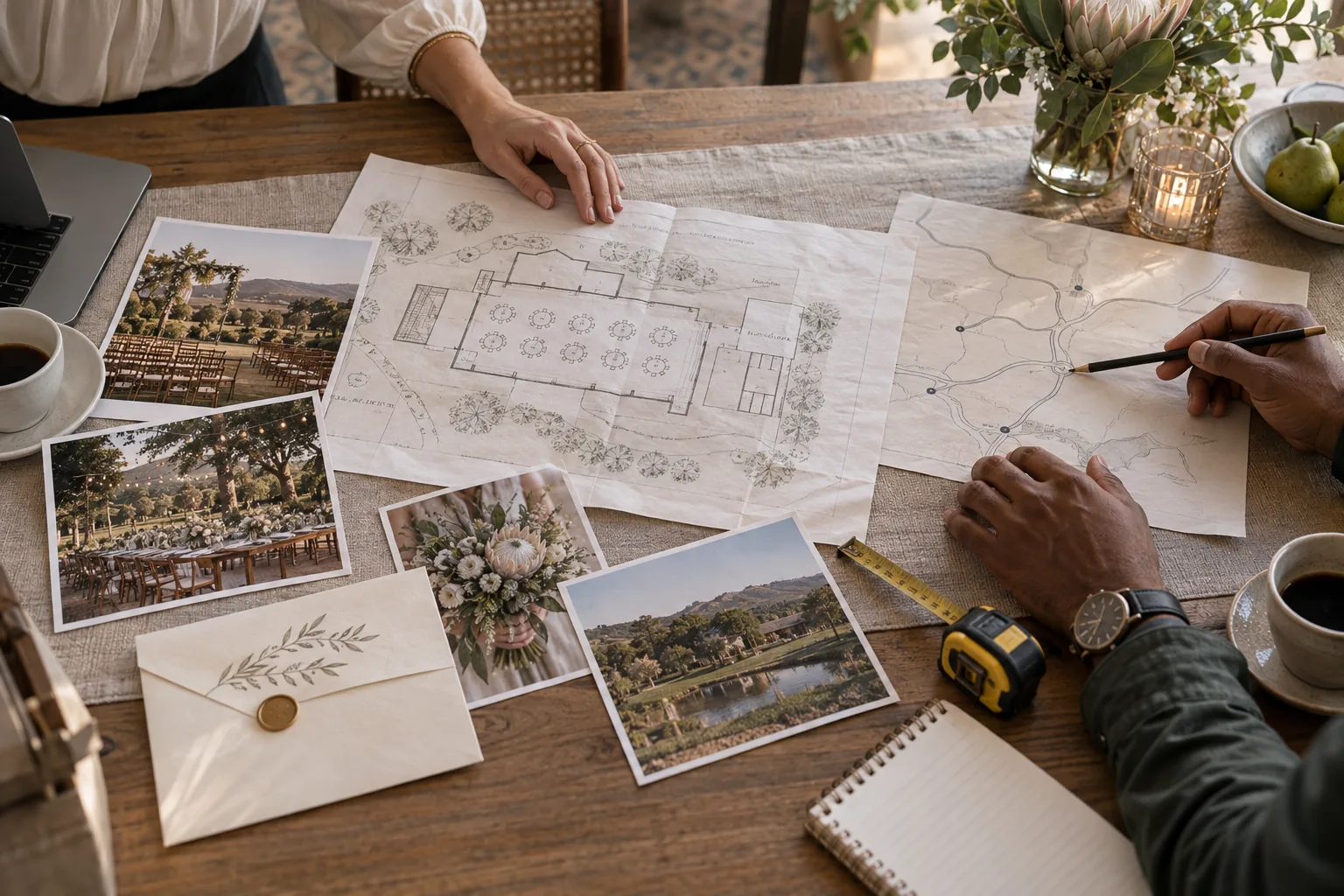
Check the route at the time your guests will travel. A weekday arrival from Johannesburg may be different from a Saturday afternoon arrival, and the journey home after a late reception needs its own plan. Do not promise a travel time in the invitation until you have tested the route and confirmed the venue entrance.
| Guest question | Evidence to request | What it helps you decide |
|---|---|---|
| Can guests find the venue easily? | Exact guest address, gate instructions and a clear arrival note | Whether the invitation needs a map, shuttle plan or extra directions |
| Can everyone get from the car to the event? | Parking surface, distance, lighting and drop-off point | Whether the site suits the guest mix and time of day |
| Can guests leave safely? | Finish-time guidance, transport options and accommodation plan | Whether a shuttle or nearby overnight option is needed |
| Can the supplier reach the working area? | Supplier entrance, unloading route and access window | Whether the venue is workable for setup and pack-down |
Compare accommodation without assuming it is included
Some couples choose Muldersdrift because the venue search can include a countryside setting and an overnight option. Treat accommodation as a question to verify, not as a standard venue feature.
Ask whether the venue itself provides rooms, whether those rooms are part of the wedding contract, and how guests book them. If accommodation is separate, compare the distance, transport, check-in arrangements and late-night return route. Ask what happens if the venue’s preferred accommodation fills up.
Build two travel plans:
- the plan for guests who drive home after the reception; and
- the plan for guests who stay overnight or use arranged transport.
The two plans may need different pickup points and different finish-time messages. Put the confirmed information in the wedding website or invitation once the venue and accommodation providers have agreed on it. Avoid giving guests a vague “nearby” recommendation when they need to know how they will get home.
Ask for a floor plan before judging room fit
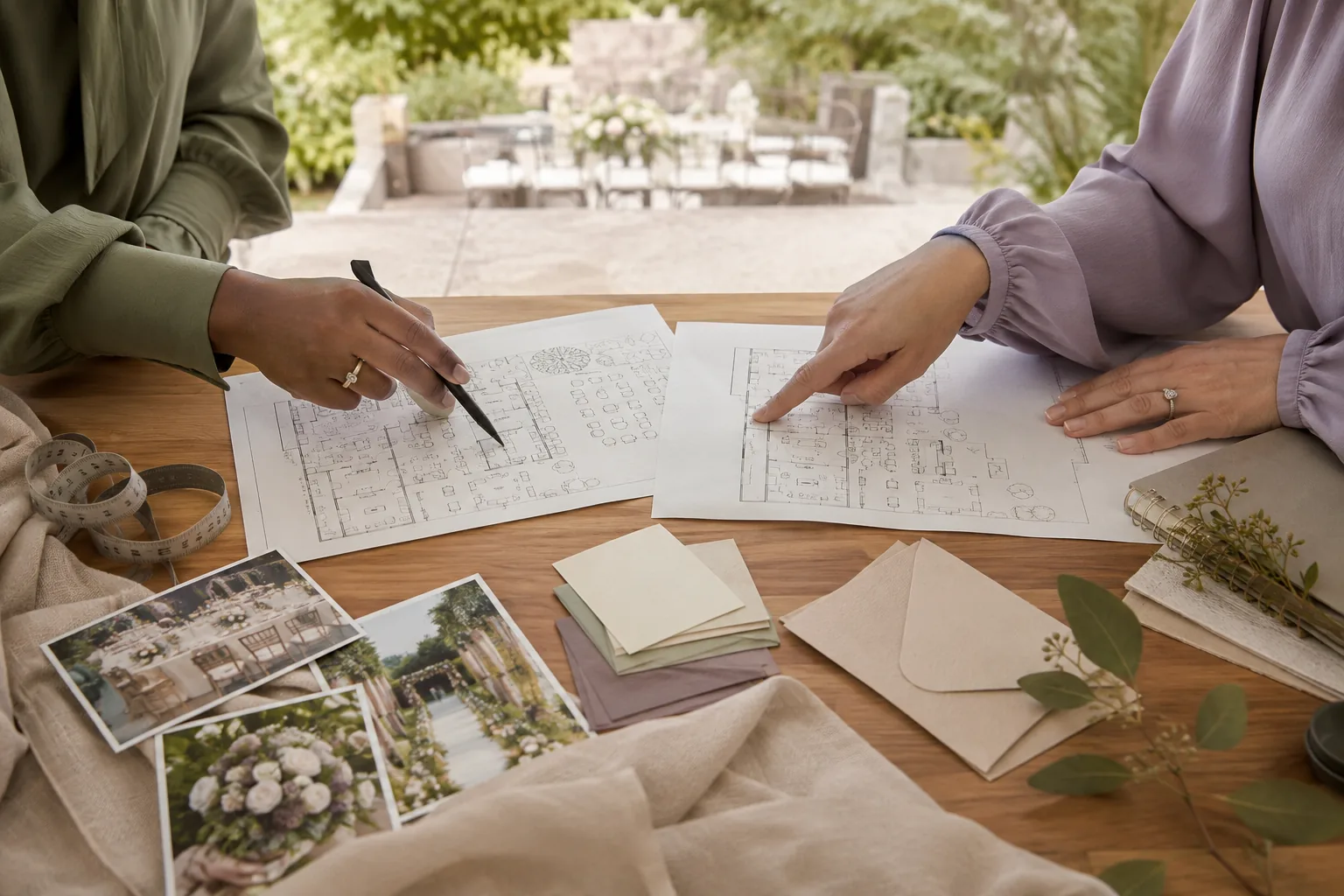
Venue capacity is not enough. Request the floor plan for the layout you are considering and mark the actual guest journey on it.
Include:
- ceremony seating or the ceremony-to-reception transition;
- guest tables, the couple’s table and any family seating;
- the dance floor and sound position;
- bar, buffet and catering routes;
- toilets, entrances and emergency exits;
- a quiet seating area and a place for children, if needed;
- the cake, gift table and guest book; and
- the planned position for a photo booth or another guest activity.
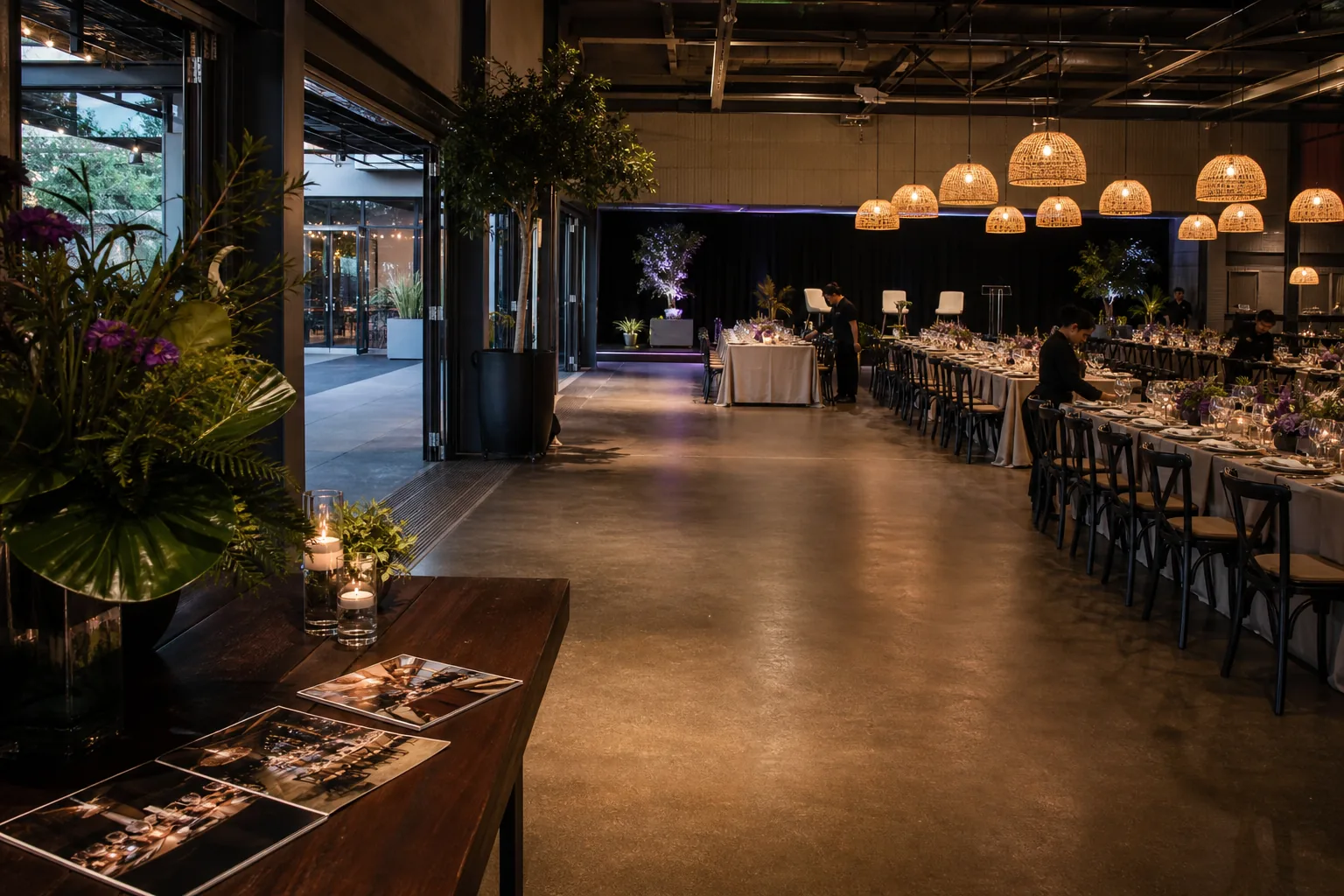
Then look for pinch points. Guests should not have to cross the dance floor to reach the bathroom, stand in the catering pass to collect a drink or form a queue across the only entrance. The room may look generous when empty and feel tight once every function has a place.
For a broader city-level venue comparison, use the Johannesburg wedding venue shortlisting checklist. It covers the same decision areas at a wider level. This article narrows the work to the travel, accommodation and supplier questions that can change when the venue is outside the city centre.
Walk through the wedding-day flow
Take a rough run sheet to the viewing. Ask the venue coordinator to walk through the day in the same order that guests will experience it:
- guests arrive, park and find the first gathering point;
- guests move to the ceremony or welcome area;
- the couple and wedding party take formal photographs;
- guests have drinks, meet one another or join a planned activity;
- the room changes for the meal, if a change is needed;
- speeches, cake cutting and other formal moments take place; and
- the room opens for dancing, socialising and the planned finish.
At each point, ask who is moving, where staff are working and what information guests need. If the ceremony and reception use different areas, ask who directs the transition and where guests wait between them. A good flow gives people enough time to settle without filling every pause with another activity.
If a photo booth is part of the plan, the wedding photo booth hours guide explains why the active window should follow guest availability and the reception programme rather than the full venue booking. The final position still needs to be approved against the venue’s floor plan, access route and power arrangements.
Treat weather backup as a booking question
An outdoor ceremony or reception needs a specific backup. “Weather permitting” is not a plan that a supplier can work from.
Ask:
- Which indoor or covered area is available if the weather changes?
- When is the move decision made, and who has authority to make it?
- Can the alternate space hold the tables, service route, dance floor and guest activity?
- How will guests move between areas without confusion or slippery surfaces?
- Where will photographs happen if the planned outdoor area is unavailable?
- What changes for sound, lighting, shade, heating, décor and supplier access?
- How will the couple, wedding party and key suppliers hear about the decision?
Write the agreed alternative into the venue notes and the final run sheet. If the weather plan moves a guest activity, confirm the new location early enough for the supplier to set up safely.
Use the South African Weather Service for a forecast check close to the event, alongside the venue’s own weather process. The forecast can inform the conversation, but it does not replace an approved layout, access route and communication plan.
Check supplier access before you pay a deposit
Supplier access is one of the easiest details to overlook when a venue viewing is focused on décor. Ask for a practical walk-through before you commit.
Confirm:
- where a supplier unloads and how far that point is from the working area;
- whether there are stairs, narrow doors, long paths, gravel or uneven surfaces;
- the earliest setup time and the latest pack-down time;
- who opens the venue and who answers questions on the wedding day;
- where usable power points are located and what equipment may share them;
- whether suppliers can visit for a measurement or technical check;
- whether packaging or cases can be stored out of guest sight;
- whether the venue has rules about outside suppliers, cables, sound, lighting or branding; and
- who approves the final floor plan.
For QuikPix photo booth options, share the venue area, guest range, planned operating window and the output you want guests to receive. If prints or messages for a guest book matter, put that in the supplier brief. The venue should approve the position and access route before the final plan is issued.
Give every supplier one named venue contact and one current run sheet. If the room or weather plan changes, the coordinator needs to communicate the change to the couple, caterer, photographer and entertainment suppliers together.
Compare venue costs and restrictions in writing
Do not compare two headline hire prices until the inclusions are described in the same way. Ask for a written breakdown and note the date of every answer.
Check:
- tables, chairs, linen, crockery and basic setup;
- catering, drinks, corkage and cake service;
- staffing, cleaning, security and service charges;
- sound, lighting, power and equipment restrictions;
- setup, guest and pack-down hours;
- overtime and additional-hour rules;
- parking, transport or accommodation charges;
- deposit, payment, cancellation and date-change terms; and
- outside-supplier, décor, candle, confetti, pet and child-related rules.
The answers may differ between venues and may change by package or date. Keep “to be confirmed” visible rather than turning it into an assumed yes. A lower headline fee is not a saving if required extras are still unknown.
Test guest comfort on the actual route
Walk from arrival to departure as a guest would. Look at the details that venue galleries rarely show:
- the distance between parking and the entrance;
- steps, ramps, uneven surfaces and door widths;
- seating for guests who need a break from standing;
- toilet location and the route to it;
- lighting after sunset;
- a quieter area for older guests, children or anyone sensitive to noise; and
- places where guests can find directions without asking staff each time.
Ask specific questions about the guests you are inviting. Do not assume that a venue’s use of words such as “accessible” or “family-friendly” covers the exact route or facility your guests need. Confirm the relevant detail with the venue before signing.
Use the same scorecard for every finalist
After a viewing or call, score each venue from 1 to 5. This is a decision aid, not an objective ranking.
| Decision area | Question to answer | Score /5 |
|---|---|---|
| Guest travel | Can the main guest groups arrive, park and leave with a clear plan? | |
| Accommodation | Is the overnight and transport plan realistic for the guest mix? | |
| Room fit and flow | Does the layout leave sensible routes for guests and staff? | |
| Cost clarity | Are inclusions, extras, timing and payment terms written down? | |
| Weather backup | Is the alternate plan specific and large enough for the programme? | |
| Supplier access | Can suppliers set up, work and pack down within the agreed windows? | |
| Guest comfort | Do routes, seating, toilets and lighting suit the people invited? | |
| Photo and keepsake fit | Can the venue support the planned photographs, guest book or photo booth? |
Add a note beside every score. “Looks lovely” will not help you decide later, while “parking-to-reception route is unlit” or “indoor backup cannot fit the dance floor” records a real reason.
If a venue fails a non-negotiable, do not let a high score in another category hide it. A countryside view cannot fix an arrival route that does not work for key guests, and a low hire price does not resolve an unclear supplier policy.
Check official information for each named venue
Use a venue’s official site for the first factual check, then ask the venue to confirm anything that affects your date, room or supplier plan. This guide intentionally does not publish capacities, package prices, availability or facility claims for individual venues because those details need current confirmation.
If Avianto’s official weddings page or Oakfield Farm’s official site is on your shortlist, use the current pages as starting points and then ask the venue to confirm the address, relevant room, guest layout, accommodation, weather alternative, access route and supplier rules. The links are provided as official information sources, not as an endorsement or a claim that either venue suits your date.
If the venue or organiser says a municipal event process or approval applies, start with the City of Johannesburg and ask which current requirement applies to your event and location. Do not rely on an old blog post or a social-media summary when an approval affects your booking.
Keep one comparison sheet for the shortlist
Use one document for the quote, floor plan, arrival route, accommodation notes and supplier answers. Add these columns:
- venue and exact address;
- guest range and layout supplied;
- ceremony and reception locations;
- parking, drop-off and transport notes;
- accommodation and shuttle plan;
- indoor weather alternative;
- supplier entrance, setup and pack-down window;
- power, sound and outside-supplier rules;
- total known cost and missing items;
- named venue contact and date confirmed; and
- non-negotiable pass or fail.
Keep a separate list of open questions. When a venue answers one, record the answer and the person who confirmed it. This prevents a verbal promise from disappearing into a long email thread.
Questions to email before a venue viewing
These questions help you decide whether a viewing is worth the travel:
- Is the requested date available, and how long can it be held while we compare options?
- What guest range works for the layout we are considering?
- What is the exact guest address, gate and parking arrangement?
- How do guests move between the ceremony, photographs and reception?
- What is included in the venue hire, and which costs are separate?
- What are the setup, guest and pack-down hours?
- What are the finish-time, sound and supplier rules?
- Where can suppliers unload, and may they visit for a measurement or technical check?
- Where are the usable power points and supplier storage areas?
- What is the wet-weather plan, and who makes the move decision?
- What accommodation and transport options should we consider?
- Who will coordinate the event on the day?
Save the replies with the quote and floor plan. If an answer is still “to be confirmed”, keep it open until someone with authority confirms it.
Choose the venue, then brief the photo plan
Once you choose a venue, send each supplier the same core information:
- final address and arrival instructions;
- guest range and the people the activity needs to include;
- room layout and the approved position;
- reception moments that need support;
- setup, operating and pack-down windows;
- venue contact and approval deadlines;
- power, lighting, access and weather information; and
- what guests should receive, such as photographs, prints or messages.
For a photo booth, confirm the guest journey before discussing the operating hours. Guests need to know where to join, where to collect a print or leave a message, and how the activity fits around speeches, dinner and dancing. Contact QuikPix with the venue area, guest range and reception timing once those details are known.
Make the shortlist smaller, not louder
Start with three to five Muldersdrift wedding venues, remove any that fail a non-negotiable, and compare the remaining options using the same floor plan, travel questions, cost test and weather plan. Add another venue only when it solves a problem the current shortlist cannot.
The strongest choice is usually the venue that gives guests and suppliers fewer surprises. Check travel, accommodation, room flow, total cost, weather backup, guest comfort and access before the visual details. When those foundations fit, the décor, music, photography and photo booth plan have a better chance of working together.
Frequently asked questions
Is Muldersdrift too far for a Johannesburg wedding?
There is no single answer. Start with where your guests live, whether they will travel after work or after a late reception, and whether overnight accommodation or a shuttle is realistic. Test the route at the expected arrival and departure times, then give guests a clear address, gate and transport note.
Should I compare accommodation before choosing the venue?
If a substantial part of your guest list will stay overnight, include accommodation in the first shortlist. Check room availability, booking responsibility, distance, transport and late-night return arrangements. Do not assume that a venue’s accommodation is included in the wedding package.
What should I ask a Muldersdrift venue about suppliers?
Ask about the supplier entrance, unloading distance, setup and pack-down windows, usable power, storage, outside-supplier rules, measurements and the person who approves the final layout. Give the answers to every supplier working from the wedding run sheet.
How many venues should I shortlist?
Three to five is enough for a careful first comparison. Keep an option only if it passes your non-negotiables or solves a clear travel, room, weather or access problem. A long list of unverified details is less useful than a short list with written answers.
When should I involve a photo booth supplier?
You can ask for planning guidance while comparing venues, but the venue normally determines the final room position, access route and operating window. Share the guest range, floor plan and reception timing once the venue supplies them, then confirm the approved position before the final supplier plan.