
In this article
Corporate event venues in Johannesburg are easier to compare when you decide what the room must do before you look at décor. An awards dinner, a leadership workshop and a product launch need different things from the same square metres. Start with the programme, guest movement, location and supplier access. Then ask each shortlisted venue to quote against one consistent brief.
This checklist is for organisers comparing venues in Johannesburg and nearby Gauteng. It helps you ask useful questions before a site visit, then check the details that a polished photograph cannot answer.
For a seasonal staff celebration, pair the venue brief with the Johannesburg year-end function planning guide. It helps choose the event format and team experience before you compare rooms and entertainment.
The same approach works when you are comparing corporate function venues or conference venues in Johannesburg. Give each venue the same brief so the replies are easier to compare.
Start with the shape of the event
Write down the programme before you ask for a venue proposal. Include arrival time, registration, formal content, breaks, meals, entertainment and the finish. A venue that works for one evening format may create awkward room changes for a full-day conference.
Use the event’s main job to narrow the first shortlist:
| Event format | Room or layout to ask about | What to check first |
|---|---|---|
| Board meeting or client briefing | Boardroom or cabaret seating | Privacy, screen visibility, sound and a quiet arrival route |
| Conference or training day | Theatre or classroom seating with breakouts | Sightlines, stage access, tea breaks, power and room-change time |
| Product launch or exhibition | Flexible floor space with a clear guest route | Loading access, display footprint, power, lighting and a weather plan |
| Awards dinner or year-end function | Banquet seating with a stage or presentation area | Service timing, table sightlines, sound checks and space between courses |
| Team day or networking event | Mixed seating and open areas | Easy movement, conversation zones, accessible participation and a wet-weather option |
The first proposal is only useful if the venue understands the event format. Ask for a sample floor plan based on your guest count and programme, not a capacity figure on its own.
If your event includes an exhibition area, use these trade show activation ideas that fit the stand and conversation goal to define the visitor interaction before the floor plan is signed off.
If entertainment forms part of the brief, decide where it belongs in the running order and how much space it needs. QuikPix’s guide to corporate event entertainment ideas covers timing and room-flow questions for that part of the plan.
Prepare one brief before you compare
Before comparing corporate event venues in Johannesburg, put the event date, access hours, guest range and programme on one page. Add the layout you expect to use, meal or refreshment breaks, presentation equipment, breakout rooms and any outdoor element. If you have a stage, exhibition stand or interactive area, include its approximate footprint. A venue cannot give you a useful answer if these details arrive one at a time.
Separate fixed requirements from preferences. The date, accessible route or required breakout rooms may be non-negotiable. A particular chair style or arrival drink may be flexible. If the guest count is still moving, ask when the price or room choice changes and when the final number must be confirmed.
Send the same brief to every venue. One proposal may include the full event day while another prices only the guest-facing hours. Ask each contact to itemise the room, setup time, equipment, catering, staffing and any outside-supplier charge. The comparison is fair only when the offers describe the same event.
Check what the capacity includes
“Capacity” can mean a standing reception, theatre rows, classroom tables or a seated meal. Those layouts use a room differently. A headline number may also exclude registration, a stage, technical control, catering stations, a dance floor or space for guests to queue.
Ask the venue for the maximum number of guests in the layout you will actually use. Request a plan that shows tables, stage, screens, service routes and accessible seating. If the event includes breakouts, check whether the smaller rooms are available at the same time and whether attendees can move between them without crossing a service area.
Official venue pages around greater Johannesburg illustrate why the numbers need context. Focus Rooms describes 16 function rooms across 3,150 square metres, with spaces ranging from smaller strategy groups to conferences for up to 800 delegates. The Garden Venue lists 12 venues in North Riding for groups from 10 to 450 delegates. Emperors Palace lists meeting facilities for groups from 8 to 3,000, in Kempton Park near OR Tambo International Airport.
These are each venue’s own published descriptions, not independent capacity tests or a like-for-like comparison. The locations and room configurations differ. Ask each venue to confirm the usable capacity, equipment and price for your exact seating plan and date.
Choose a location your guests can reach
Johannesburg events often draw people from several parts of the metro, and some guests may arrive from another province or overseas. Pin the likely starting points before choosing a suburb. Ask how guests will reach the venue at the time your event ends, as well as how they will arrive in the morning.
Check practical details with the venue:
- the number of parking bays available to your event and any separate parking charge;
- where ride-hailing vehicles can drop off and collect guests;
- whether a shuttle can stop near the entrance without blocking deliveries;
- the nearest public transport option and the walking route from it;
- travel time from the airport or nearby accommodation for out-of-town guests; and
- whether guests with mobility needs can use the same entrance and route as everyone else.
If the event spans the day, find out whether guests can leave and return, where they can take a call, and whether a quiet space is available. These small details affect how comfortable the venue feels after the first hour.
Walk the supplier route before signing
Ask when suppliers may arrive, where they unload and how long the setup window lasts. A venue may have a smooth guest entrance but a separate loading route with limited access. Confirm lifts, stairs, trolley routes, security sign-in, storage and the time equipment must be removed.
Share the proposed floor plan with your caterer, AV team, décor supplier and any entertainment provider. Confirm who supplies tables, staging, screens, microphones, lecterns and extension leads. If the venue uses preferred suppliers or charges a fee for outside suppliers, get the conditions in writing before you compare quotes.
Power and sound deserve a specific check. Ask which sockets or circuits are available for event use, who approves cable runs and how the room handles presentations while meals are served. Do not assume that a wall socket near the stage is available or sufficient. Ask for a sound check slot and a named venue contact for technical changes on the day.
For a conference or client briefing, test a presentation from the laptop you will use on the day. Check screen connectors, embedded video, audio playback and Wi-Fi access. If guests need internet access, ask whether there is a separate guest network and who can help with connection problems. Confirm who brings adapters, a spare microphone and offline copies of presentation files. Put those responsibilities in the supplier brief.
For an outdoor event, agree a decision time for moving indoors. Check the indoor backup room’s capacity, layout and availability. A weather plan is useful only if it can accommodate the same event without an overnight room reset.
Use the site visit to test the plan
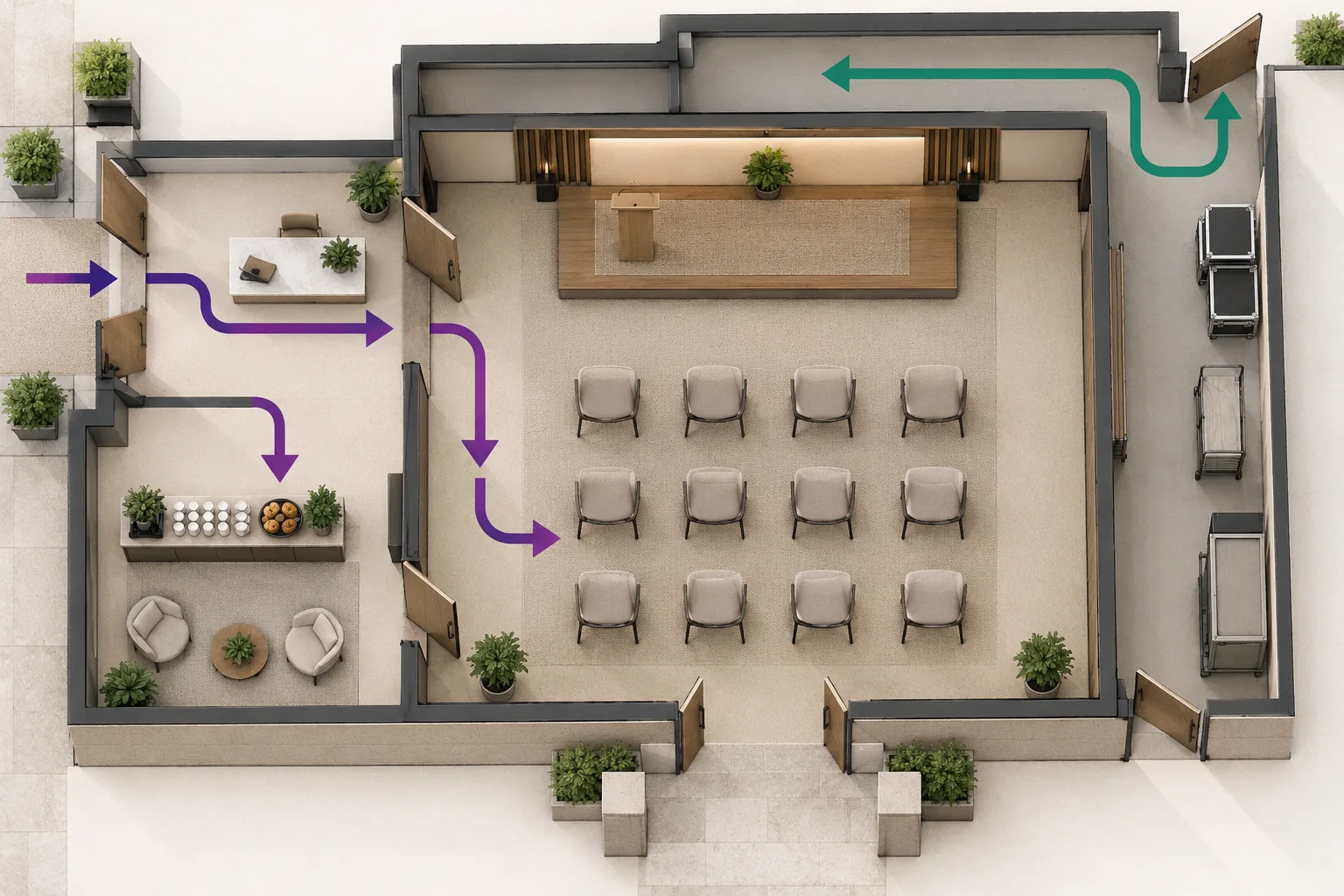
Bring the draft schedule and floor plan. Walk the arrival route from the parking or drop-off point to registration, then into the event room. Continue to the toilets, breakout space and meal area. Look for places where two queues could meet or where late arrivals would cross a presentation.
Ask the venue to show you the room in the proposed layout, even if furniture is not set up. Mark the stage, screens, registration table, catering points and supplier storage on the same plan. Check sightlines from the back and from seats near pillars or doors. If you plan a product display or activity, measure its footprint and the guest route around it.
Confirm the supplier route during the visit. Ask to see the loading point, lift or trolley path and the place where cases can wait before setup. Find out who can open the room and when the event manager will be available. For a full-day programme, check whether the room stays yours during breaks or is reset while guests are outside.
Take notes against the same questions for each venue. With permission, photograph the layout and access points for the planning team. Do not rely on memory to distinguish two similar rooms after a week of visits.
Map the guest experience from arrival to departure
Walk the route a guest will take. Where is registration? Can late arrivals enter without interrupting a presentation? Will the queue for coffee cross a doorway or catering route? Is there a place to wait if the room is not ready?
Ask the venue to confirm step-free routes, accessible toilets, accessible parking and seating options. If a presentation includes audio or visual material, check what support the room and AV team can provide. Include breaks and quiet space in the plan for a long programme. If guests can opt into an activity instead of being called to participate, the room needs a clear place for both groups.
Keep service lanes and emergency exits clear when you add a stage, display or activity area. A feature that fits on the drawing can still obstruct people once chairs are occupied and catering staff are moving. Walk through the final layout with the venue before it is approved.
Compare the full quote and booking terms
Ask each venue to quote the same guest count, hours, seating plan, meal requirements and equipment. A room-hire price is difficult to compare if one proposal includes furniture and AV while another prices those separately.
Check the line items for venue hire hours, setup and strike time, catering, service charges, VAT, equipment, staffing, security, parking and cleaning. Ask how overtime is charged and whether late supplier access incurs another fee. Confirm the deposit, balance due date, cancellation terms and what happens if the event date changes.
For catering, ask whether menus can accommodate dietary requirements and when the final guest count is due. Confirm how the venue handles late additions, children, suppliers who need meals and guests who arrive after service starts. Get the agreed menu and service times attached to the proposal.
If the venue will collect registration or attendee information, ask who can access it, how long it is kept and who handles follow-up. Put any data-sharing arrangement in the event brief rather than assuming the venue will pass a guest list to the organiser.
Review the booking risks before you pay
Confirm how long the proposal and date hold remain valid. Ask when the deposit is due, what makes the booking final and how a date change is handled. Read the cancellation terms alongside the payment schedule. If the venue has a weather backup, ask whether the alternative room is reserved for your event or only available if it has not been booked by someone else.
Check what happens if the programme runs late or a supplier needs extra setup time. The venue may charge for additional staffing or room hours even if guests have already left. Ask who approves an extension on the day and whether a venue manager must remain until strike is complete.
Put the final decisions in one written schedule. Record the access window, layout version, catering times, AV responsibility, supplier contacts, weather decision and end-of-event plan. Name the person who may approve a change. If the quote, floor plan and email describe different arrangements, ask the venue to issue one corrected version before you pay.
Shortlist corporate event venues in Johannesburg
Use one comparison sheet for every venue. Record the suburb, travel notes, event-specific capacity, room layout, access window, included equipment, catering, full quote, contract terms and unanswered questions. Mark whether a detail came from an email, a site visit or a general page on the venue’s website.
Score each option against the same priorities. You might give more weight to location and room flexibility for a conference, then more to sightlines and service timing for an awards dinner. Mark each item from one to five and add a short reason beside the rating. A four for “location” is only useful if you note which guest group it suits.
Keep unanswered questions visible rather than giving them an average score. A missing answer about load-in, an accessible route or the outdoor backup can affect the whole event. Give the venue a deadline to resolve it. If two options remain close, compare which one makes the timetable and supplier handovers simpler, then check that the contract reflects that plan.
Before you commit, have the event owner and venue contact review the same final plan. Confirm the date, booking hours, access times, layout, menu, technical requirements and weather decision in writing. If one item is still uncertain, name who will resolve it and by when.
Questions to ask on a venue visit
- Can you show the room in the seating plan we need, with the stage, screens and registration area included?
- What guest count can you serve comfortably in that layout?
- Which rooms are reserved for breakouts, catering or a wet-weather move?
- When may each supplier arrive, and where does equipment enter the building?
- Which AV, lighting and power items are included in the quote?
- Who approves sound levels, cable routes and technical changes?
- How do guests reach the venue, park and arrange a safe collection after the event?
- Which routes and facilities support guests with mobility or sensory needs?
- What is excluded from the quote, including VAT, staffing, security, parking and overtime?
- What are the deposit, cancellation and date-change terms?
- Who is the event-day contact, and when will the final plan be signed off?
Write the answers into the comparison sheet while they are fresh. It makes the final choice easier to explain and reduces the risk of discovering a cost or access rule during setup.
When the plan includes a photo booth
Treat a photo booth like any other supplier. Confirm its footprint, power needs, setup and strike times, and where guests would wait without blocking registration or service. Choose the format after the venue layout and event timing are clear. You can compare QuikPix’s photo booth options and request a quote with the event date, suburb, expected guest count and preferred operating hours.
When comparing corporate event venues in Johannesburg, look for a room that supports the programme and gives guests a straightforward day. A clear floor plan, a comparable quote and a confirmed supplier route make that choice easier to check before you pay a deposit.