Category: Weddings

  • Where Should the Photo Experience Go at a Wedding Venue?

    Where Should the Photo Experience Go at a Wedding Venue?

    The best position is usually inside the reception’s natural movement pattern, but outside its service routes. Guests should notice the photo experience while moving between dinner, the bar and the dance floor. Catering staff, venue teams and guests using mobility aids must still have clear passage.

    Do not choose the position from a photograph of an empty venue. Mark it on the final floor plan, walk the route during the venue handover and confirm access, power, weather protection and the queue footprint with the venue.

    Start with the room, not the backdrop

    A beautiful corner can be a poor operating position. It may be hidden after dinner, blocked by opened doors or placed across a route used by waiters carrying trays.

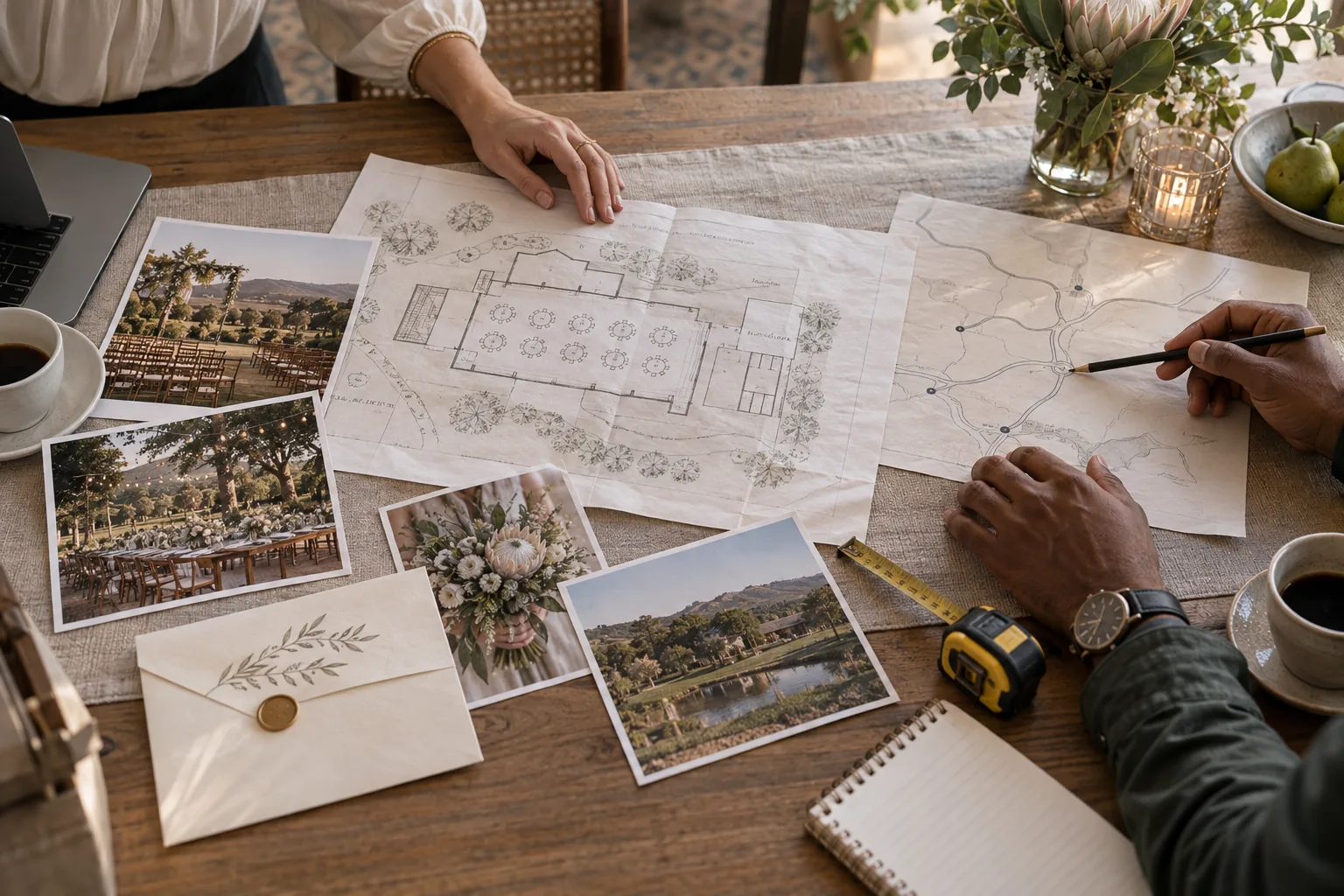
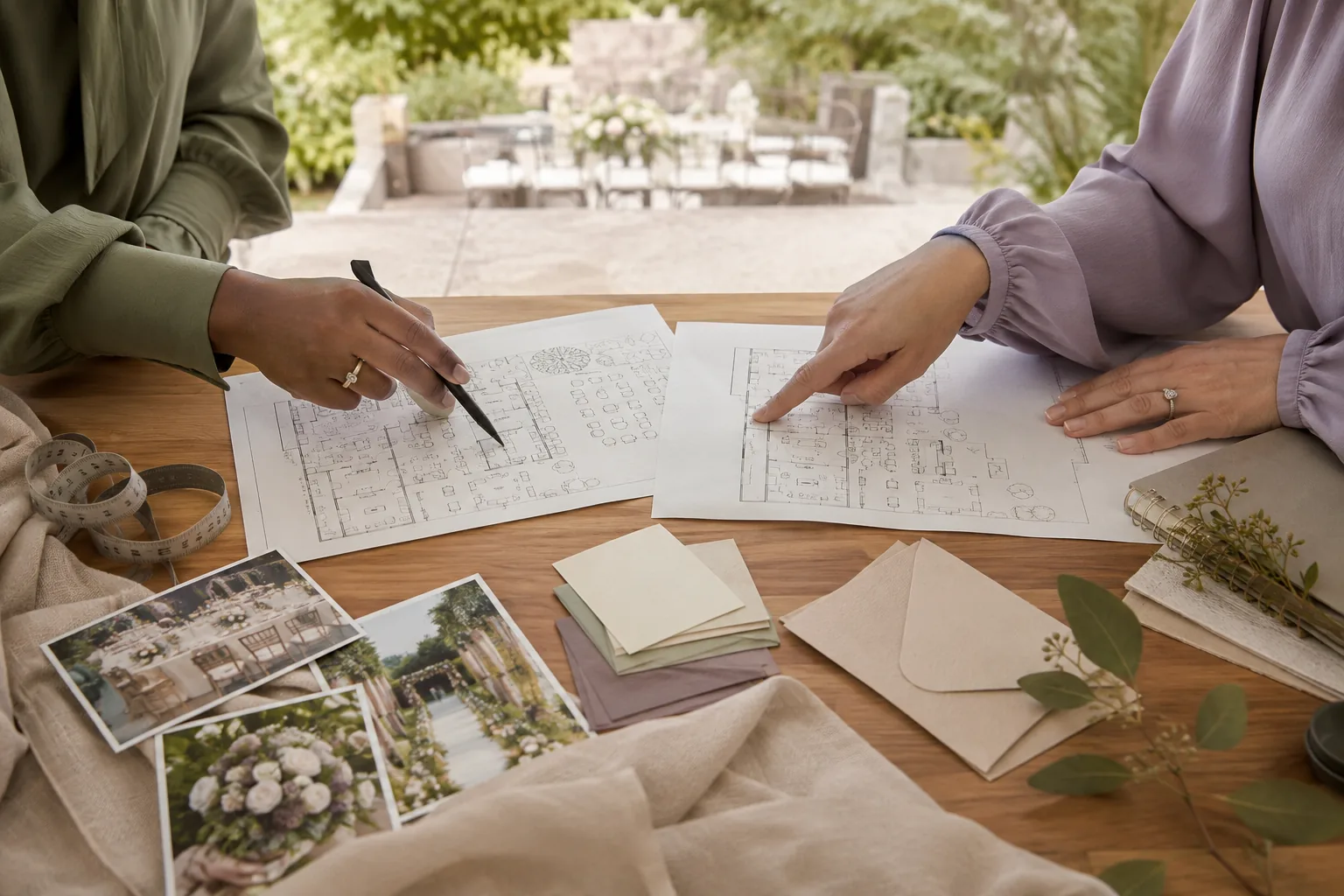
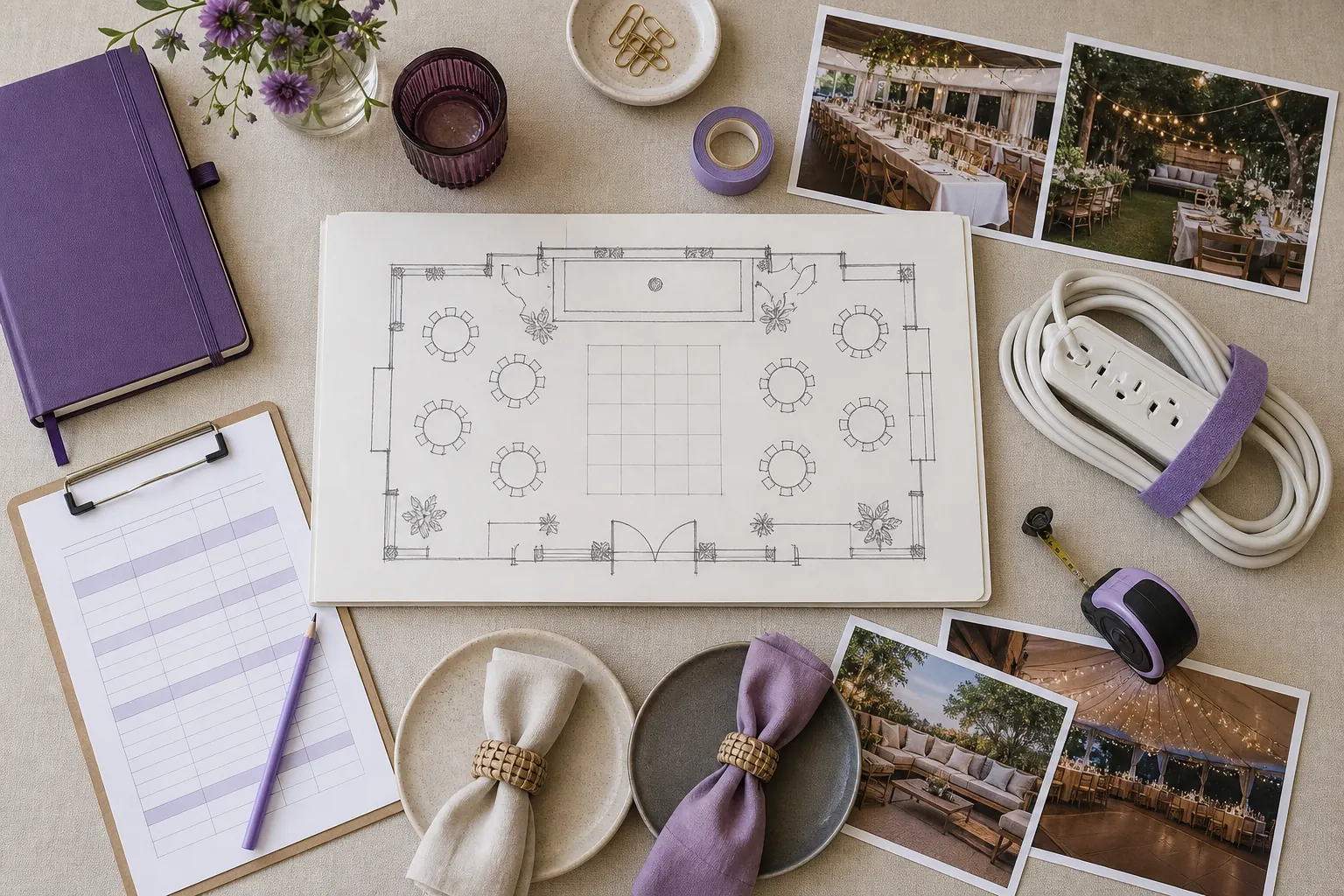
    Begin with the final reception plan. Add the main entrance, dining tables, dance floor, bar, bathrooms, kitchen doors, emergency exits and any outdoor areas that will be used. Then trace how guests will move through the room at four moments:

    1. arrival and welcome drinks;
    2. the move to dinner;
    3. speeches and formalities;
    4. dancing and late-evening social time.

    The useful position is normally visible during at least two of those moments. It should not depend on guests leaving the main celebration and discovering a separate room by accident.

    If the venue changes from ceremony to reception in the same space, ask which furniture moves, who controls the changeover and when suppliers can enter. A position that works for the ceremony layout may disappear once dining tables, a band or a dance floor are installed.

    Use a simple placement test

    Shortlist two positions on the floor plan and test each one against the same questions.

    Can guests see it without an announcement?

    Visibility matters more than being at the centre of the room. A clear sightline from the bar queue, dance-floor edge or route back from the bathrooms is often enough.

    Avoid placing the experience behind a curtain, on another floor or around a corner unless the event programme deliberately sends guests there. Signage can help, but it should not rescue an isolated position.

    Can a small queue form without blocking anyone?

    Allow for the operating area and the people waiting, watching or deciding what to do next. The queue rarely forms as a neat straight line. Friends gather, finished groups look at their photographs and other guests pause nearby.

    Keep this activity away from:

    • kitchen and service doors;
    • the main route between tables and bathrooms;
    • emergency exits and fire equipment;
    • ramps, lifts and accessible routes;
    • the couple’s entrance route;
    • the dance floor edge where moving chairs or speakers reduce space.

    Ask the venue to confirm any minimum clearances that apply to the room. Do not move fire equipment or cover exit signs.

    Is the experience close enough to the celebration?

    The position should feel connected to the reception, not like a separate appointment. Near the bar or dance floor can work because guests already move through those areas, but only if noise, lighting and queue space remain manageable.

    A foyer can be effective during welcome drinks and less useful after dinner. A covered patio can be inviting in good weather and empty when temperatures drop. Match the position to the hours when the experience will actually operate. The separate guide on how many hours to book a photo booth for a wedding helps align the operating window with the reception programme.

    Confirm power before the floor plan is signed off

    Do not treat a nearby wall socket as approval. Ask the venue or supplier to identify the suitable power point and confirm whether the circuit is shared with catering, entertainment, heaters or lighting.

    The final route from the outlet to the operating position must not create a trip hazard. Leads should not cross a doorway, aisle or guest route without a venue-approved cable-management solution. Do not tape a lead across a carpet or floor and assume the problem is solved.

    Add these questions to the venue handover:

    • Which outlet should the supplier use?
    • Is it on a circuit shared with high-load equipment?
    • May leads run along the proposed wall or service edge?
    • What cable protection does the venue require?
    • Who must approve the final setup before guests enter?
    • What happens if the planned outlet is unavailable on the day?

    For load shedding or a venue power interruption, ask the venue and supplier what their actual backup arrangements cover. Do not assume a generator supplies every socket in the building.

    Check access from the delivery route

    Guest visibility is only half the placement decision. The supplier must also reach the position safely and on time.

    Confirm the loading point, parking instructions, lift size, stairs, door widths and the distance from the vehicle to the room. A venue may allow supplier access only through a service entrance or during a fixed window. Security sign-in and estate access can add time, especially at gated Gauteng venues.

    Ask whether the route will be shared with florists, musicians, décor teams or caterers during setup. If the lift is small or the service passage is congested, agree on an arrival sequence rather than leaving suppliers to negotiate it on the day.

    The position must remain accessible for pack-down too. If furniture, a stage or guest transport blocks the exit route later, the venue and supplier need a different plan.

    Protect the formal parts of the reception

    A photo experience should not compete with speeches, the first dance or important announcements. The position and operating plan can reduce that risk.

    Avoid placing a lively queue directly behind the couple or in the photographer’s main sightline. Check where the videographer will stand and which direction speeches will face. If the room is compact, agree on a short pause during formalities rather than relying on guests to notice what is happening elsewhere.

    Sound also travels differently in a furnished room. Ask the MC, DJ and venue coordinator whether the proposed position will interfere with speakers, band equipment or the route to the microphone.

    Plan for lighting without changing the venue mood

    The room may look very different once house lights are dimmed for dancing. Ask the supplier what ambient light is needed around the operating and queue areas, then check the plan with the venue.

    Do not position guests where a bright light points towards dining tables, the stage or the couple during speeches. Also avoid direct sunlight through late-afternoon windows if it will create glare or uneven exposure.

    If the event uses candles or low decorative lighting, keep cables and equipment clear of the décor plan. The venue’s fire and safety requirements take priority over a preferred visual layout.

    Build a proper weather fallback

    Outdoor placement needs an approved indoor alternative. A covered terrace is not automatically weatherproof, especially in a Gauteng summer storm or during a cold winter evening.

    The fallback must pass the same checks as the first choice:

    • enough operating and queue space;
    • suitable power;
    • a clear supplier access route;
    • no conflict with catering or emergency routes;
    • visibility during the planned operating hours.

    Put both positions on the floor plan. Decide who makes the weather call and by what time. Moving after guests arrive is disruptive and may be impossible if the indoor space has already been filled with furniture.

    Include accessibility in the first layout

    Accessibility is not a final adjustment. Keep the route to the experience step-free where the venue provides a step-free guest route, with enough turning space and no loose leads across the approach.

    Ask the venue about thresholds, ramps, lifts, floor surfaces and the accessible bathroom route. The operating position should not narrow those routes when a queue forms.

    South Africa’s building standards framework and the venue’s approved safety plan may affect circulation and access. The Department of Trade, Industry and Competition’s building standards update explains the national regulatory context. Rely on the venue’s responsible person for the requirements that apply to the specific building and event.

    Put ownership next to every decision

    The floor plan should name who confirms each point. “Check power” is not a completed task. “Venue coordinator confirms outlet and cable route by final handover” is.

    Use a small sign-off table:

    Decision Owner Confirm by Evidence
    Final operating position Couple or planner with venue Final floor-plan approval Marked floor plan
    Power point and cable route Venue and supplier Venue handover Written confirmation
    Supplier access window Venue coordinator Supplier briefing Access note
    Queue footprint Planner and venue Floor-plan review Measured clear area
    Weather fallback Planner, venue and supplier Before event week Second marked position
    Formality pauses MC or coordinator Final run sheet Timing note

    Keep the final plan with the event run sheet and share the same version with the venue, coordinator and supplier. Conflicting floor-plan versions are a common source of day-of confusion.

    Wedding venue placement checklist

    Before approving the position, confirm:

    • guests can see it from a natural reception route;
    • the queue does not block service, exits or accessible movement;
    • the operating hours match when guests will use that part of the venue;
    • the venue has approved the power point and cable route;
    • the supplier can load in and pack down through a workable route;
    • the position does not disrupt speeches, dancing or professional photography;
    • lighting remains safe and appropriate after the room is dimmed;
    • an outdoor plan has a fully checked indoor fallback;
    • one named person owns each final approval;
    • the marked position appears on the floor plan shared with every relevant supplier.

    Once the layout is workable, compare the available photo booth formats against the space, guest mix and event style. If you already have the final floor plan and programme, contact QuikPix with those details so the practical requirements can be checked before a quote is finalised.

    Once the position and operating flow are agreed, compare photo booth print sizes and layouts for strips and postcards before approving the event artwork and print handover.


  • How Many Hours Do You Need a Photo Booth at a Wedding?

    How Many Hours Do You Need a Photo Booth at a Wedding?

    Most full wedding receptions need about three to four active photo booth hours. Treat that as a planning range, not a package recommendation. The right duration depends on when guests are free, how many people must move through the photo area, the length of speeches and dinner, and whether the booth opens during pre-drinks or after the formal programme.

    The strongest window usually covers two distinct moments: a quieter early period for family and polished group photographs, then a livelier period after dinner when friends return for repeat photos. Build the hours around those moments instead of simply matching the full venue booking.

    Count active guest time, not the whole reception

    A six-hour reception does not automatically need six photo booth hours. Guests may spend part of that time entering the venue, finding seats, eating, listening to speeches, watching the first dance or moving between rooms. Those periods can leave the photo area quiet even though the event is busy.

    Start with the run sheet and highlight the periods when guests can choose what to do. Those are the useful operating blocks.

    Typical free-flow periods include:

    • pre-drinks while the couple finishes portraits;
    • the gap between courses at a relaxed dinner;
    • the transition after speeches and before open dancing;
    • the first two or three hours of the party;
    • a late-evening period when the formal photographer may already have finished.

    Do not count a full dinner service as active time merely because the booth is available. If guests are seated, the operator and equipment may be ready while very few people use them.

    Wedding timelines vary with guest count, food service, venue layout and the number of formal moments. A general wedding reception timeline is useful for checking the order of events, but your venue, caterer, photographer, DJ or band must confirm the actual timings.

    Use three to four hours as a practical starting range

    Three hours can work when the photo booth opens at the right moment and the reception has a clear flow. Four hours gives more room for staggered arrivals, longer speeches, repeat visits and guests who take time to move from their tables.

    Use the event pattern to choose a starting point:

    Reception pattern Planning range What must be true
    Small dinner followed by dancing About 3 hours Guests are in one room and formalities finish on time.
    Standard evening reception About 3 to 4 hours The booth covers an early social period and part of open dancing.
    Larger reception with several guest groups About 4 hours The photo area is visible, queues are managed and formalities do not consume the full window.
    Short daytime wedding About 2 to 3 hours The booth opens soon after the ceremony and stays accessible through the main social period.
    Reception with long speeches or multiple performances Build from the run sheet Pause or delay the opening so paid operating time is not lost during seated programme blocks.

    These are planning examples, not confirmed QuikPix package lengths or availability. Ask for a current quote using the real date, venue and preferred operating window.

    Let guest count change the duration only when flow supports it

    Guest count matters, but it is not a simple formula. One hundred guests in a room with a visible photo area may move through more easily than sixty guests spread across a terrace, bar, dining room and garden.

    Estimate the pressure by asking:

    1. How many guests are likely to take part?
    2. Will they arrive at the photo area gradually or all at once?
    3. How large are the likely groups?
    4. Will people return for extra photographs?
    5. Can a queue form without blocking a doorway, bar, buffet or service route?

    A short window can create a sudden rush immediately after speeches. Adding time helps only if guests can see the photo area and reach it easily. If the booth is hidden in a separate room, a longer booking may still produce quiet periods.

    For a larger wedding, fix the floor plan before buying extra time. Place the photo area near a natural circulation route but outside the path between the kitchen, tables, toilets and dance floor. Leave a clear waiting edge so groups can gather without closing the aisle.

    Choose the opening time before you choose the closing time

    The opening time shapes the whole decision. There are two useful options for most receptions.

    Open during pre-drinks

    This suits weddings where guests have a noticeable wait between the ceremony and reception. Family groups are still together, clothing and makeup are fresh, and the activity gives guests something to do while the couple finishes portraits.

    Check the trade-offs:

    • the couple may miss the early photographs;
    • guests may move to another part of the venue when dinner starts;
    • outdoor pre-drinks need a weather backup;
    • supplier setup must be complete before the ceremony ends;
    • the same booth may need to remain in place for the later reception.

    This option works best when pre-drinks happen close to the reception room and the equipment does not need to be moved between phases.

    Open after dinner or speeches

    This concentrates the hours into the liveliest part of the evening. The couple is present, formal photographs are mostly done and guests are ready to move. It also reduces the risk of paying for a long seated dinner period.

    The risk is delay. If dinner runs late, speeches expand or a performance is added, the opening can slip. Decide in advance who has authority to adjust the run sheet and how the operator will be told.

    A useful compromise is to open near the end of dinner, once the first tables are free to move, then remain available through the early dancing period.

    Protect the hours from speeches, dinner and the first dance

    Formalities often take longer than the first draft of the run sheet. A five-minute speech becomes fifteen minutes once introductions, applause and handovers are included. A buffet may release tables in stages. The first dance can lead directly into parent dances or a live performance.

    Mark every fixed programme item, then add a realistic buffer around it. The photo booth does not have to close during a short speech, but you should expect participation to fall while guests are asked to watch or listen.

    The DJ, MC, coordinator and operator need the same timing information. Give them one final run sheet that shows:

    • supplier access and setup time;
    • the point when guest use begins;
    • speeches and formal dances;
    • any planned announcement about the photo booth;
    • last call for photographs;
    • guest closing time and supplier breakdown access.

    Avoid repeated announcements. One clear mention after the formal programme and one last-call reminder are usually easier on guests than frequent interruptions.

    Check the venue conditions before adding more time

    Extra hours do not solve a poor setup. Confirm the practical conditions first.

    Access and setup

    Ask when suppliers can enter, which entrance they must use, where they may unload and when the room must be clear. A tight setup window can affect the earliest sensible opening time.

    Power and Wi-Fi

    Confirm the required power position with QuikPix and the venue. Do not assume a decorative corner has a suitable outlet. If the selected experience uses online sharing, ask what connectivity is required and what happens if venue Wi-Fi is weak.

    Space and queues

    Use actual measurements, not a floor-plan symbol drawn to look convenient. Check the equipment footprint, operator position, guest standing area and queue edge. Keep accessible routes open.

    Before the floor plan is final, use this wedding venue checklist for placement, power and queue checks.

    Weather backup

    For gardens, courtyards and terraces, agree on an indoor alternative before the day. The fallback space needs the same checks for power, guest flow and setup access.

    If you have not chosen the experience yet, compare the QuikPix photo booth options before locking the floor plan. Different formats create different placement and output decisions.

    Build the duration from a simple wedding run sheet

    Use this method with your coordinator or venue manager:

    1. Write the ceremony end time and guest arrival time at the reception.
    2. Add pre-drinks, dinner service, speeches, cake, formal dances and entertainment.
    3. Highlight the periods when guests can move freely.
    4. Choose the first free-flow period that matters to you.
    5. Keep the booth open until the last meaningful guest wave, not automatically until venue closing.
    6. Add a small buffer for programme delay.
    7. Check whether the proposed hours match the available QuikPix booking options.

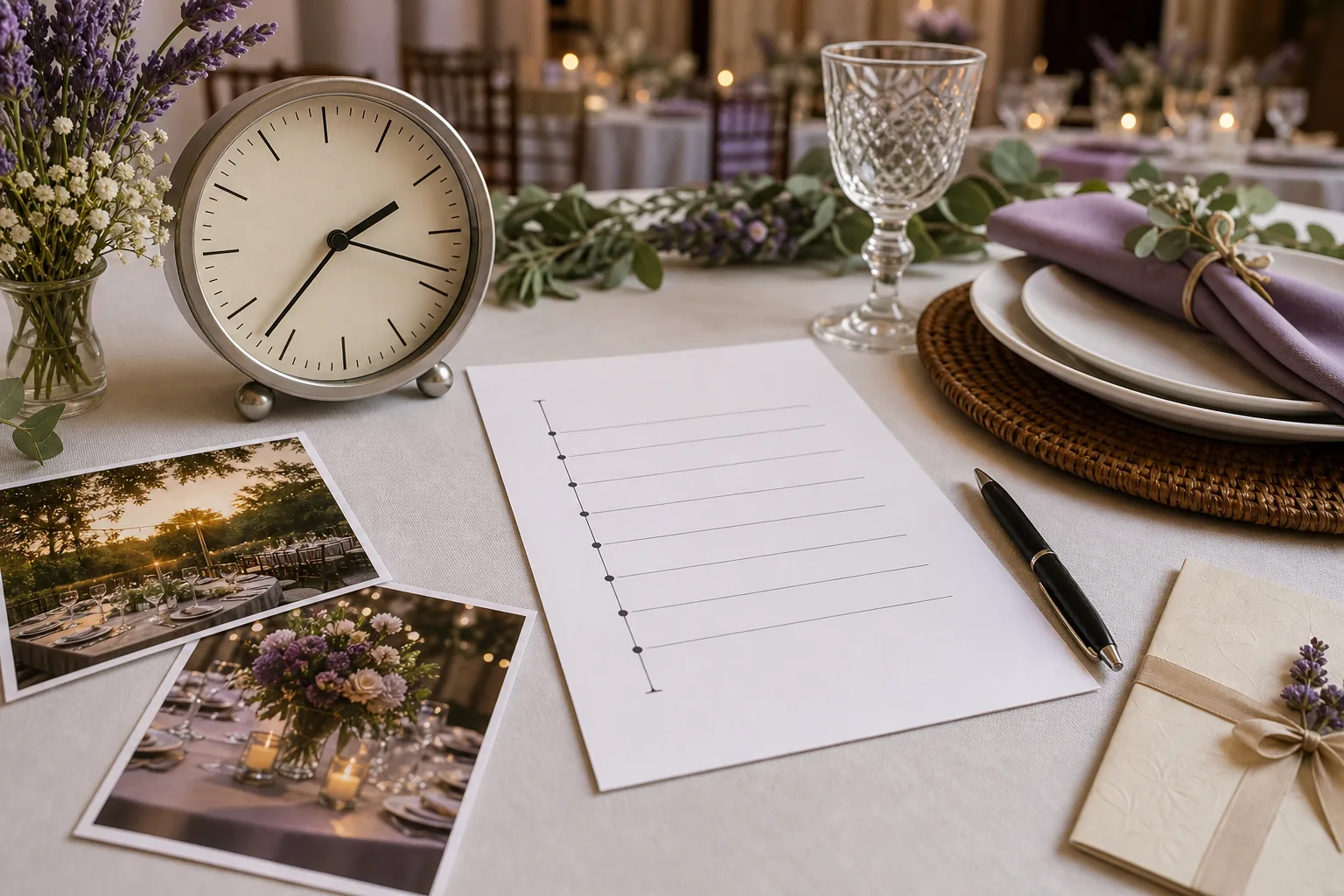
    For example, a reception might have pre-drinks from 16:30, dinner from 18:30, speeches at 20:00 and open dancing from 21:00. The couple could choose an early window that starts during pre-drinks, or a concentrated evening window that begins near the end of dinner. Both can be sensible. The decision depends on which guest photographs matter more and how much programme risk the couple wants to carry.

    Keep this separate from the booking lead-time question. If the date is not yet reserved, use the guide on how far in advance to book a photo booth before finalising artwork or a detailed run sheet.

    Ask these questions before accepting the quote

    Send the supplier a usable brief rather than only asking for a package price.

    Include:

    • wedding date and full venue address;
    • estimated guest count;
    • ceremony and reception locations;
    • proposed guest operating hours;
    • indoor or outdoor placement;
    • preferred photo booth type, if chosen;
    • print or digital output requirements;
    • venue access and breakdown limits;
    • the person responsible for timing on the day.

    Then ask:

    1. Which available option best fits the proposed active window?
    2. When must setup begin for that opening time?
    3. What information does the venue need to approve the setup?
    4. How are overtime or timing changes handled?
    5. When is final artwork or event information due?
    6. What must be confirmed about power, connectivity and weather protection?

    Do not assume the answer from an old package, another supplier or a previous event. Get the current details in writing for this wedding.

    Final decision checklist

    Before you settle the photo booth hours, confirm that:

    • the chosen window includes at least one strong free-flow guest period;
    • dinner and speeches do not consume most of the operating time;
    • the couple will be present for part of the window;
    • larger guest groups have enough time and queue space;
    • the venue has approved the location, access and power plan;
    • the DJ, MC, coordinator and operator share the same run sheet;
    • an outdoor setup has a workable weather backup;
    • the quoted option and timing are current and confirmed.

    If those points are clear, three to four active hours is a sound place to begin the conversation. If the reception is shorter, more formal or split across several spaces, adjust the window around the guest flow rather than adding hours by default.

    When your date, venue and draft run sheet are ready, send QuikPix the wedding details so the team can confirm availability and the most practical operating window.

star star star star star
Fast Response Guaranteed

Get a quote in a few clicks.

Pick your favourite booth, share your details, and we'll handle the rest.

Step 1: Contact & Booth Step 2: Event Details
expand_more
expand_more
check

Quote Requested!

We've received your details and will send a custom quote to your email shortly.

WhatsApp Us